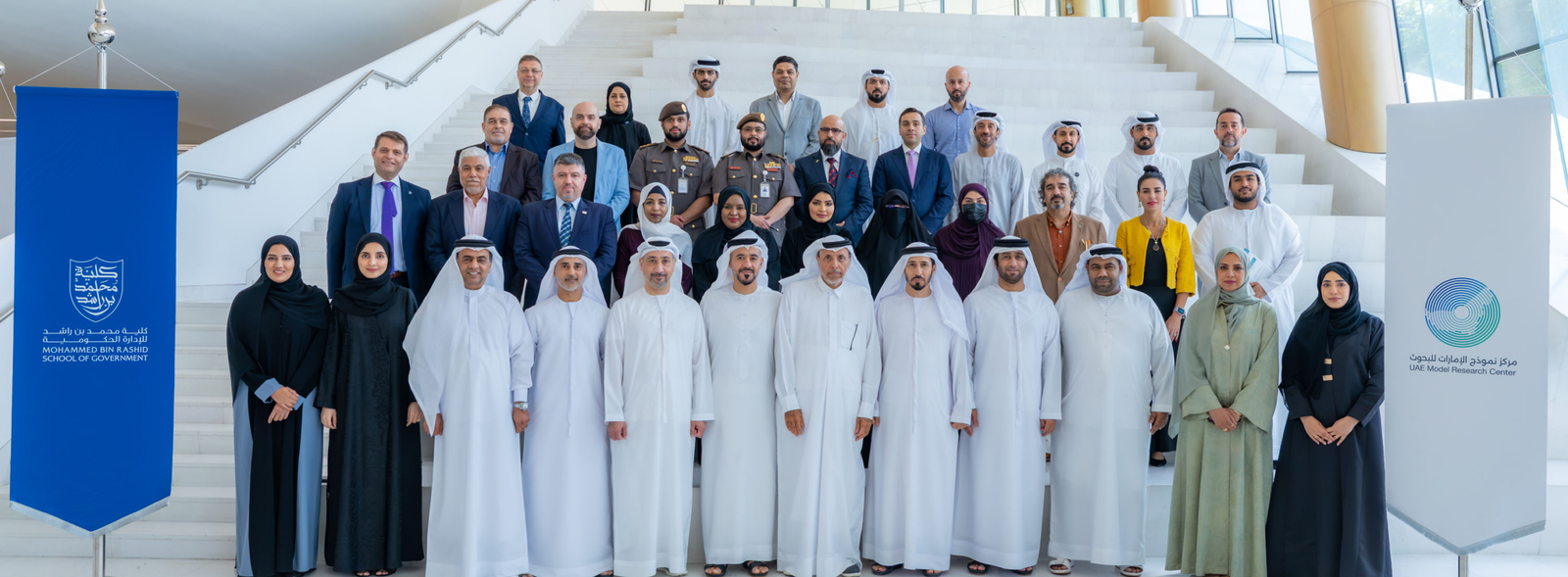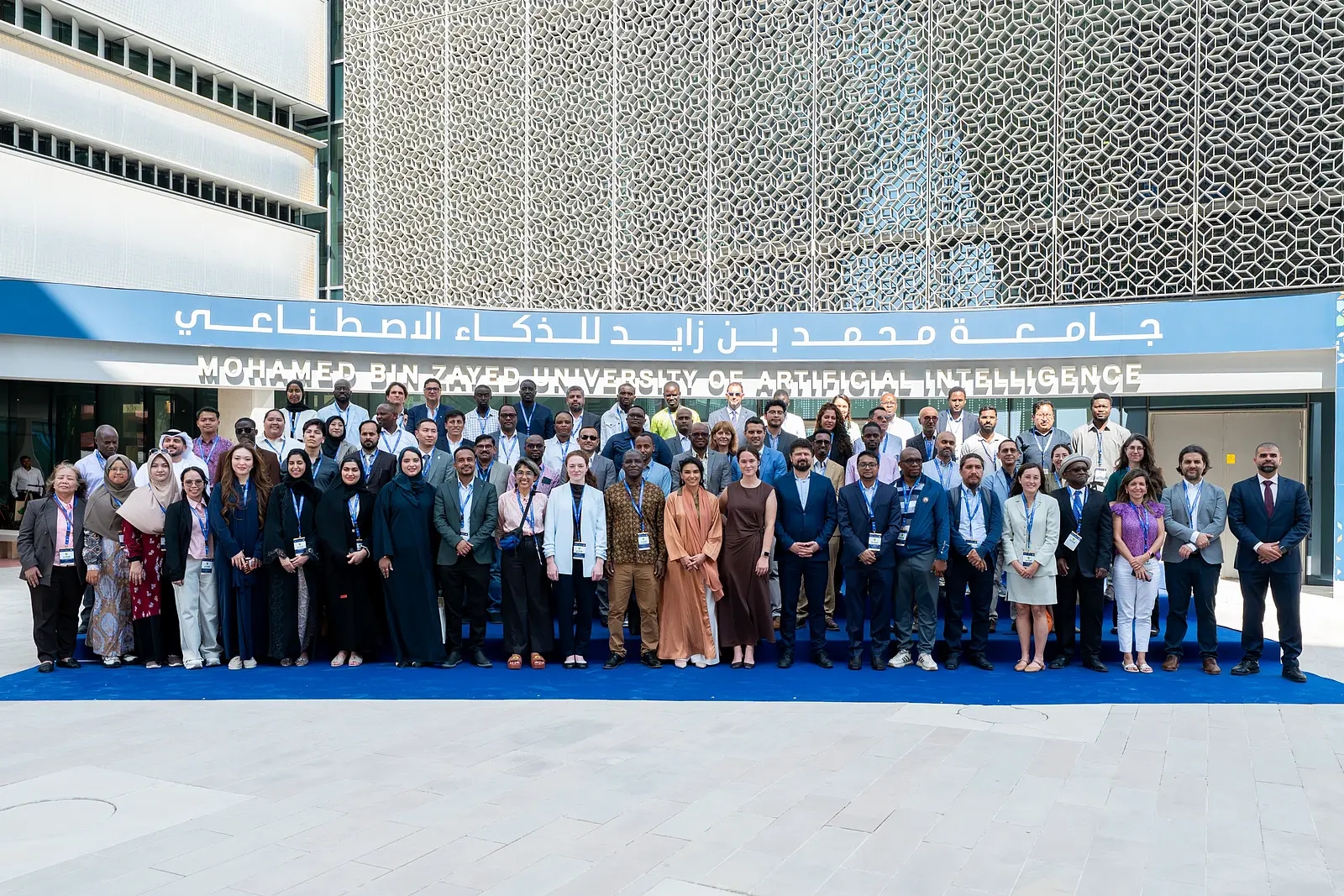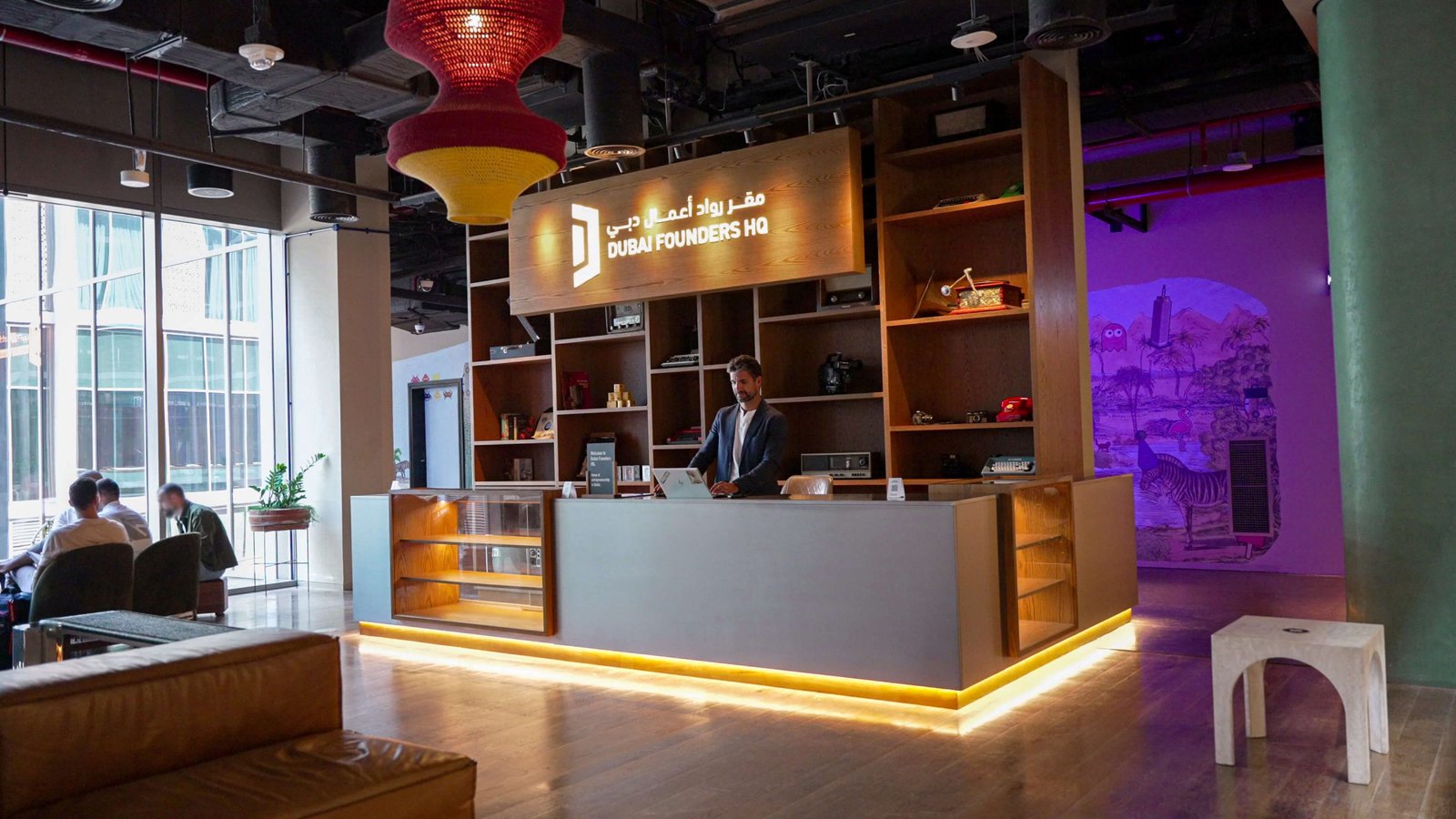
Dubai SME has named the three winning teams of the second edition of Majlis Al Mustaqbal, its three-day forum for aspiring entrepreneurs. The programme ran from 10 to 12 November at Dubai Founders HQ, and it brought together 50 participants across nine teams to work on real problems set by government bodies and companies.
The winning ideas all use artificial intelligence, and each one tackles a practical problem. The first place team wants to guide new founders through their first 100 days after getting a trade licence, the second wants to turn satellite data into useful answers, and the third wants to make government services easier for older people and People of Determination.
A bank’s AI guide for new founders takes first place
First place went to D100, a team from Commercial Bank of Dubai. Its idea is an AI platform that walks a newly licensed founder through the first 100 days after receiving a trade licence, covering the steps, the paperwork and the money decisions that trip up new businesses.
The idea came from a problem the bank sees first hand. Startups stall and close their bank accounts because founders struggle to keep up with procedures and manage their money, and the D100 team set out to fix that with a guide that answers questions as they come up.
It is a fitting winner for a programme about turning ideas into businesses. A bank watches more new companies fail in their first months than almost anyone else, so its team started from the failure rather than the pitch.
Satellite data and court services take second and third
Second place went to Polaris, a team from the Mohammed Bin Rashid Space Centre. Its project is an analytical engine that turns the centre’s satellite data into information shaped for individual government bodies and private companies, so each one can use it in its own decisions.
Third place went to Azwa, a team from Dubai Courts. Its idea is an AI-assisted portal that helps senior citizens and People of Determination use judicial and municipal services on their own, without needing someone else to navigate the process for them.
All three teams received cash prizes, though the amounts were not disclosed. The three projects were chosen from nine teams, and each one was built around a challenge set by a partner organisation.
Three days of mentoring, then a pitch to a jury
The programme mixed mentorship, teamwork and pitch practice over three days. Participants worked with industry experts, mentors and representatives from government entities to shape their ideas into concepts they could defend in front of a jury.
Nine entities from the government, private and academic sectors took part, including the Mohammed Bin Rashid Space Centre, Dubai Culture, Dubai Police, Dubai Municipality, Dubai Courts, the General Directorate of Residency and Foreigners Affairs in Dubai, the Knowledge and Human Development Authority and Commercial Bank of Dubai.
Two senior officials visited during the week. Abdulla Ali bin Zayed Al Falasi, deputy chairman of the Emirati Human Resources Development Council, attended on 11 November, and Aisha Miran, director general of the Knowledge and Human Development Authority, attended on 12 November.
What Dubai SME wants from the programme
Majlis Al Mustaqbal, which translates as Gathering of the Future, is Dubai SME’s way of giving young entrepreneurs a structured start. The establishment, part of the Dubai Department of Economy and Tourism, launched the programme in April 2026, and the first edition’s winners included a platform connecting entrepreneurs with startups, a logistics matching service and a programme linking small firms with service providers.
The wider goal is scale. Dubai SME says it wants to help launch 27,000 projects by 2033, and it provided around AED44 million in funding to startups in 2025, up by more than 25 per cent on the AED35 million it provided in 2024.
That funding goes mainly to UAE nationals who meet the approved criteria, and it is aimed at priority sectors such as technology, artificial intelligence and logistics. The forum sits alongside that funding as the earlier step, where an idea is tested before any money is asked for.
What three proposals tell us about Dubai’s startup help
The honest thing to say about these winners is that they are still proposals. No funding, timeline or commitment to build them has been announced, and a pitch prize is not the same as a product.
But the choice of winners still says something useful. All three ideas start from a real friction point, a founder lost in paperwork, a pile of satellite data nobody can use, or an older resident locked out of a service, and each one uses AI to remove that friction rather than to show off the technology.
That is a healthy instinct for Dubai’s startup scene. The city does not need more demo days. It needs more teams that start from a problem someone actually has, and this forum, at its best, is a place where those teams get their first serious test.