Schoolchildren in the UAE are about to get a closer look at how artificial intelligence actually works, not just how to use it. Yango Group, the Dubai-headquartered technology company, has launched an education initiative that takes AI and robotics into classrooms across the country.
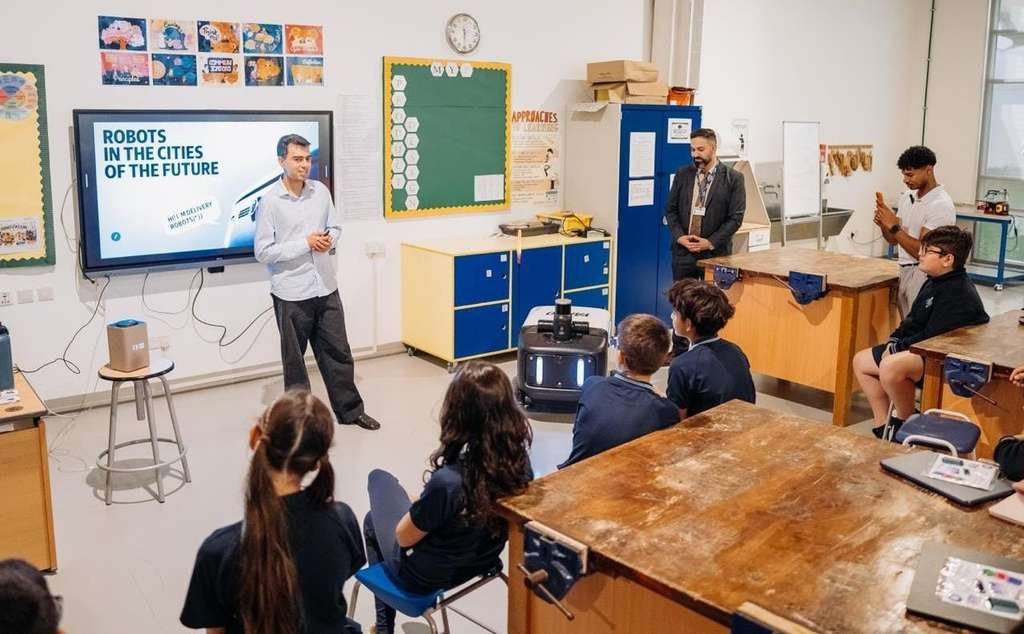
The first workshop took place at GEMS World Academy in Dubai, where around 50 pupils aged 10 to 12 spent a session with Yango’s technology specialists, learning by doing rather than by listening.
The idea behind the initiative is straightforward: as AI becomes part of everyday life, young people should understand how it works, where it falls short and why human judgement still matters. Yango Group, headquartered in Dubai and operating in more than 30 countries, runs ride-hailing, delivery, foodtech and entertainment services, alongside its Yasmina voice assistant.
The workshop was the first step in a wider plan to make AI and robotics education available to more students across the UAE, and Yango says it welcomes approaches from other schools that want similar sessions in their classrooms.
Robots that sense, plan and move
The first part of the workshop focused on autonomous robotics. Yango’s experts showed pupils how sensors and navigation software work together to help a machine spot obstacles, plan a route and react when its surroundings change.
The example they used was Yango’s own autonomous delivery robot, a small machine built to carry orders without a driver. Pupils also heard about the role of human oversight in autonomous operations, and the practical problems of putting robots to work in real streets and buildings, where things rarely go exactly as planned.
For children who have only seen robots on a screen, watching a real machine respond to its environment makes the idea concrete. It also shows them that a robot is not magic: it is a set of sensors, software and decisions, and each of those can be understood, tested and improved.
Talking to Yasmina in Arabic and English
The second session turned to conversational AI, using Yango Yasmina, the company’s bilingual voice assistant, which now supports more than 20 Gulf Arabic dialects. Pupils tried talking to Yasmina in both Arabic and English, and asked how it understands what they say, chooses a response and learns from large amounts of language.
They also learned that the assistant can mishear, hallucinate and reflect biases in the material it was trained on. The session was designed to be hands on, with pupils testing Yasmina directly rather than only hearing about how it works.
That lesson matters beyond the classroom. Voice assistants are already in many homes, and children who know how they work, and how they can go wrong, are better placed to use them well.
Why the timing fits the UAE’s AI push
The initiative lands at a moment when the UAE is putting AI into public school curricula and pushing a wider national goal to lead in artificial intelligence. Islam Abdul Karim, General Manager, Yango Group Middle East, said schools need help to turn early enthusiasm into consistent learning, and to get pupils asking how AI works, not just how to use it.
Khalid Mahmoud, General Manager, Yango Delivery, said he sees the programme as a chance to connect the classroom with the workplace.
Beyond the two sessions, the workshop aimed to build skills that travel well: critical thinking, problem solving, collaboration and responsible technology use. Pupils were encouraged to ask what the technology does and also to think about what it should do.
What Yango’s school workshops mean for UAE classrooms
There is a real difference between teaching children to use AI and teaching them how it works, and this workshop is clearly on the useful side of that line. A child who has watched a robot use a sensor to stop, and asked Yasmina why she gave a wrong answer, knows something real about the technology.
But one workshop will not teach the whole of AI. The test now is reach, and whether more schools take Yango up on its offer.
Companies can open their technology to show how it works and how it works in practice. Parents should ask about depth, progression and what comes next.