The next time you write a Google review about a meal in Dubai, your words could do more than guide other diners. Dubai Municipality has launched intelSPECT, an artificial intelligence tool that reads customer reviews of restaurants and food outlets across the emirate to spot food safety problems early.
The tool was unveiled on Monday 16 November at the 20th Dubai International Food Safety Conference, which runs until 18 November at Dubai World Trade Centre. It is one of several new initiatives under a three-year plan called The Roadmap for the Future of Food Safety in Dubai.
What intelSPECT does with your Google review
intelSPECT is short for intelligently inspect. The system scans what customers post on Google and continuously analyses it for warning signs, using natural language processing to sort concerns by type and risk.
It looks for mentions of pests, contamination, suspected food poisoning, cleanliness problems and poor food preparation. When a pattern appears, such as several reviews pointing at the same dish or the same type of cuisine, officials can trace the common link and check the source.
The reviews are treated as clues, not verdicts. A single bad review does not prove a violation, and it can spot cases where someone is targeting a restaurant on purpose.
How inspectors decide where to go first
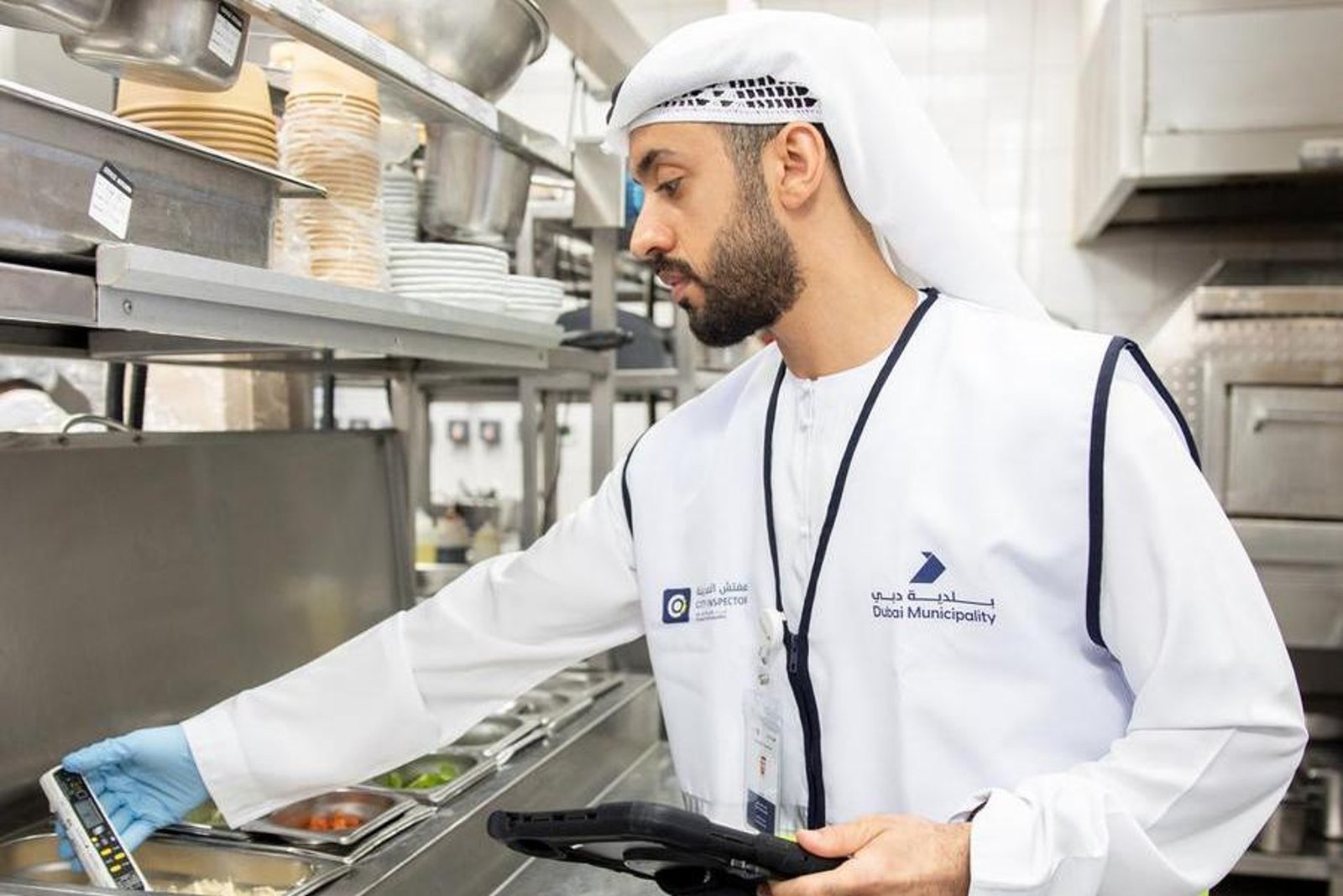
Dubai Municipality says the tool uses a risk-based approach. It groups areas of the city by risk, so inspection teams can focus on the places where problems are most likely, instead of working through a fixed list.
Dr Naseem Mohammed Rafee, Acting CEO of the Environment, Health and Safety Agency at Dubai Municipality, said the shift is from reacting to problems to preventing them. Rather than waiting for an incident, the municipality can use customer feedback to find problem areas early and take preventive action.
Bobby Krishna, Principal Food Safety Specialist at the municipality, said the tool is built for foresight, not complaint monitoring. It uses reviews and other data to forecast risks, so action can start before a problem grows.
The tool will not replace human inspectors. It helps managers and inspection teams decide which restaurants to visit on a given day, rather than waiting until the following week. Restaurants can also be contacted through the municipality’s DM Checked platform to fix issues.
The Dubai AI company behind the system
intelSPECT was built by PropAI, a Dubai-based AI company. The tool is based on the Dubai Food Code, the municipality’s own set of food safety rules, so the checks it runs match the standards inspectors already use.
PropAI is best known for AI tools in property, where it helps buyers and brokers with discovery and valuations. It raised a $1.5 million pre-seed round in June 2025 and is one of the companies certified under Dubai’s AI Seal programme for trusted AI firms. The food safety project shows the same technology being applied to a very different problem.
The company says fake reviews are a real challenge. Google already has systems to flag them, and PropAI is building its own detection as well. Its view is that it is better to have more information than to miss a genuine warning.
A three-year plan, and cameras could be next
intelSPECT is the first initiative under the three-year roadmap, which covers innovation, artificial intelligence, partnerships and food safety. Other tools shown at the conference include inSIGHT, which uses AI to flag microbial risks on surfaces in food factories, and a handheld device called CSI that scans surfaces for contamination invisible to the naked eye.
Dubai Municipality also plans to place cameras inside restaurant premises to collect operational data, though no timeline has been given for that step. Smart glasses that record where and when inspections happen were also on show, along with an educational platform called HealthyfAi.
What intelSPECT means for everyone who eats out in Dubai
For diners, the message is simple. The review you leave after a bad meal is no longer just a warning to other customers. It is now part of the city’s food safety system, and a few honest lines could send an inspector to a kitchen before anyone gets seriously ill.
For restaurants, the change is just as real. A pattern of complaints about one dish or one branch will now reach the municipality faster than a formal complaint ever could. The smart response is to treat every review as an early warning, fix the problem and reply properly, because how a business responds is part of what the system sees.
The risk worth watching is fairness. A small restaurant with few reviews gives the system little to work with, while a popular one generates plenty of signal, good and bad. And an AI that reads public opinion will only be as fair as the reviews it reads.
If Dubai Municipality keeps human inspectors in charge of the final call, this could become one of the most useful ways a city has ever used everyday feedback. If it does not, the system will punish the loudest complaints rather than the riskiest kitchens.
For now, the idea is sound. Dubai is turning something residents already do, talking about their food, into a public safety tool. That is a clever use of AI, and it costs diners nothing more than a review they were going to write anyway.