
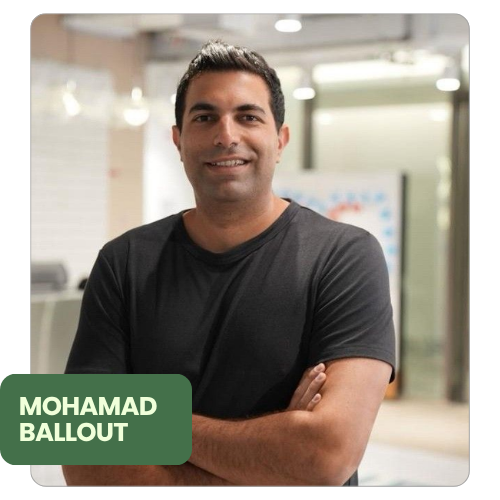
Mohamad Ballout is the CEO of Kitopi, a food-tech unicorn defined by his obsession with unit economics and high-performance culture. He successfully pivoted Kitopi from a B2B platform to a consumer-centric brand aggregator.
Lesson #1: The Discipline of Unit Economic Obsession
During the initial unicorn era, many founders fell into the trap of buying growth with venture capital while ignoring fundamental leaks in their business model. In fact, Ballout rejected this path by instilling a rigid focus on unit economics across every level of Kitopi’s operations.
This strategy is not about high-level revenue figures. It is a granular and almost surgical focus on the profitability of every single burger flipped and every delivery dispatched. For Ballout, if a single kitchen location or a specific brand partner cannot stand on its own financially, it is a liability to the collective.
By prioritizing contribution margins over top-line vanity metrics, he ensured that Kitopi did not just scale fast but scaled sustainably. This discipline allowed the company to pivot from burning cash to achieving free cash flow positivity by late 2025.
“Be unit economic obsessive. The days of growth at any cost are over. You must prove the model works at the smallest level before you dare to dream big.”
Lesson #2: The Art of Radical Simplification
Ballout operates on the principle that complexity is the ultimate enemy of execution. In the high stakes environment of tech-enabled logistics, it is easy to get lost in feature creep or convoluted corporate structures.
He challenges his leadership team to strip every problem down to its skeletal frame. If a strategy cannot be articulated simply enough for a frontline kitchen operator to understand, he deems it too complex to scale.
This clarity has been instrumental in aligning a workforce of over 5000 employees. By simplifying the mission to satisfying the world’s appetite, he removed the friction that often slows down large organizations. This allows the company to move with the agility of a startup despite its massive footprint.
Lesson #3: Culture as Scalable Infrastructure
Many CEOs view culture as a soft asset for human resources to handle, but Ballout treats it as the core infrastructure of the business. He believes that while a competitor can copy your technology or your menu, they cannot replicate the soul of your team.
He has fostered a high performance and caring environment where psychological safety meets rigorous accountability. This culture acts as a shock absorber during periods of rapid change or market volatility.
By hiring for cultural addition rather than just cultural fit, Ballout has built a diverse engine of innovation. He often remarks that the success of the company is not due to his vision alone but to the collective ownership felt by employees.
“No matter how fast we move, we work really hard on reminding ourselves that we are all unique individuals on the same team. Culture eats strategy for breakfast.”
Lesson #4: Synchronizing the Two Gears of Growth
A recurring theme in the leadership of Ballout is the mastery of two speeds. He argues that a successful founder must be able to switch gears instantly between the slow gear of long term systems building and the fast gear of tactical execution.
The slow gear involves investing in Kitopi’s proprietary Smart Kitchen Operating System. This is a multi year endeavor to build the brain of the company which requires patience and deep research.
The fast gear is about the hustle of opening new markets in weeks and adapting to shifting consumer tastes overnight. Ballout’s ability to keep these two gears in sync ensures that the company is robust enough to last for decades but fast enough to lead the market today.
Lesson #5: Pivoting to a Consumer First Identity
Kitopi began its life as a back-end fulfillment partner or a service for existing restaurants. However, Ballout recognized a ceiling in that model and executed a daring strategic pivot to become a consumer powerhouse.
This shift meant taking full responsibility for the end-to-end customer experience. It was no longer just about cooking the food. It was about owning the data, the delivery, and the emotional connection with the person eating the meal.
By obsessing over customer feedback loops and data mining tastes, Kitopi transformed into a brand aggregator. This transition allowed them to capture more of the value chain and ensure that quality control was a measurable metric that drove a 75% repeat customer rate.
Lesson #6: Relationship Capital and Proactive Fundraising
Ballout views fundraising as a strategic partnership built over years rather than a desperate hunt for cash. He advises founders to build the well before they are thirsty by establishing deep ties with global investors long before a term sheet is signed.
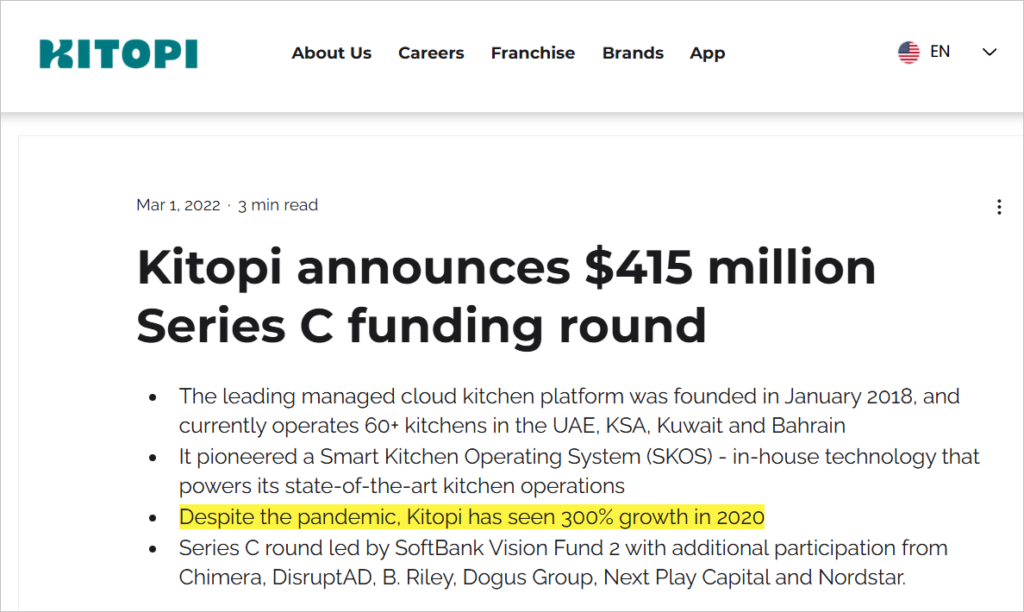
He focuses on transparency and consistency. By delivering on promises over multiple quarters before asking for capital, he built a trust surplus. This made the massive 415 million dollar Series C round from SoftBank a logical progression rather than a gamble.
This lesson is vital for regional founders. The best time to raise money is when you do not strictly need it, because that is when you have the most leverage to choose the right partners.
Lesson #7: The Humility to Hire Better
A hallmark of Ballout’s tenure is his lack of ego regarding talent. He famously recalls a light bulb moment when he realized that every member of his executive suite was technically superior to him in their respective fields.
Instead of feeling threatened, he leaned into it. He sees his role as the Chief Orchestrator rather than the smartest person in the room. This humility has allowed Kitopi to attract world-class talent from global tech giants.
By surrounding himself with experts in artificial intelligence and supply chain logistics, he freed himself to focus on the 30000-foot view. This includes scaling the brand and exploring new frontiers like crypto loyalty programs.
“Our light bulb moment was noticing that every member of the team was smarter than us. We were proud of our ability to inspire and attract such talent.”
💡 What is The 30,000-Foot View?
The 30,000-foot view in business means looking at the big picture instead of small details. It helps you focus on strategy, long-term goals, and overall direction.
For example, a founder in Dubai may spend the day fixing ads or replying to clients. But at a higher level, they pause and ask:
- Is my business ready to expand to Saudi Arabia?
- Am I building a strong brand or just chasing short-term sales?
That shift helps the founder focus on growth, not just tasks.
Lesson #8: Entering New Markets with Local Ears
When Kitopi expanded into the Kingdom of Saudi Arabia, Ballout did not just copy the Dubai playbook. He approached the expansion with strategic humility and acknowledged that every market has its own cultural DNA.
He believes that many startups fail during international expansion because of founder arrogance. This is the belief that what worked in the home market is a universal law. Ballout insists on listening to local stakeholders and adapting the menu to fit local nuances.
This listen-first strategy turned Saudi Arabia into one of the most profitable regions for Kitopi. By hiring local leadership and tailoring the tech stack to regional preferences, he ensured that Kitopi felt like a local hero in every city it entered.
Lesson #9: Technology as a Solution and Not a Narrative
In a world full of tech washing, Ballout is a pragmatist. He views technology strictly as a tool to solve physical world problems, such as the inherent inefficiency of traditional kitchen layouts.
The Smart Kitchen Operating System of Kitopi is designed to reduce human friction. It optimizes everything from the sequence of ingredients on a prep line to the heat retention of packaging.
For Ballout, innovation is only valuable if it improves the bottom line or the customer’s time to table. This grounded approach to data has prevented Kitopi from chasing expensive tech trends that do not yield a tangible return on investment.
Lesson #10: The Resilience of the Pivot Mindset
Finally, Ballout teaches that the greatest asset of a founder is their ability to endure and adapt. His career includes ventures that did not reach unicorn status which provided him with the scars necessary to navigate the volatility of the tech scene.
He encourages his team to view failure as data points. When a brand underperforms, they do not mourn but instead analyzes and pivot. This resilience was on full display during the pandemic when Kitopi rapidly adjusted its model to meet a 300 % surge in delivery demand.
By maintaining a day one mentality, Ballout ensures that Kitopi never becomes complacent. He remains a founder who is perpetually looking for the next problem to solve and keeps the company in a state of constant evolution.