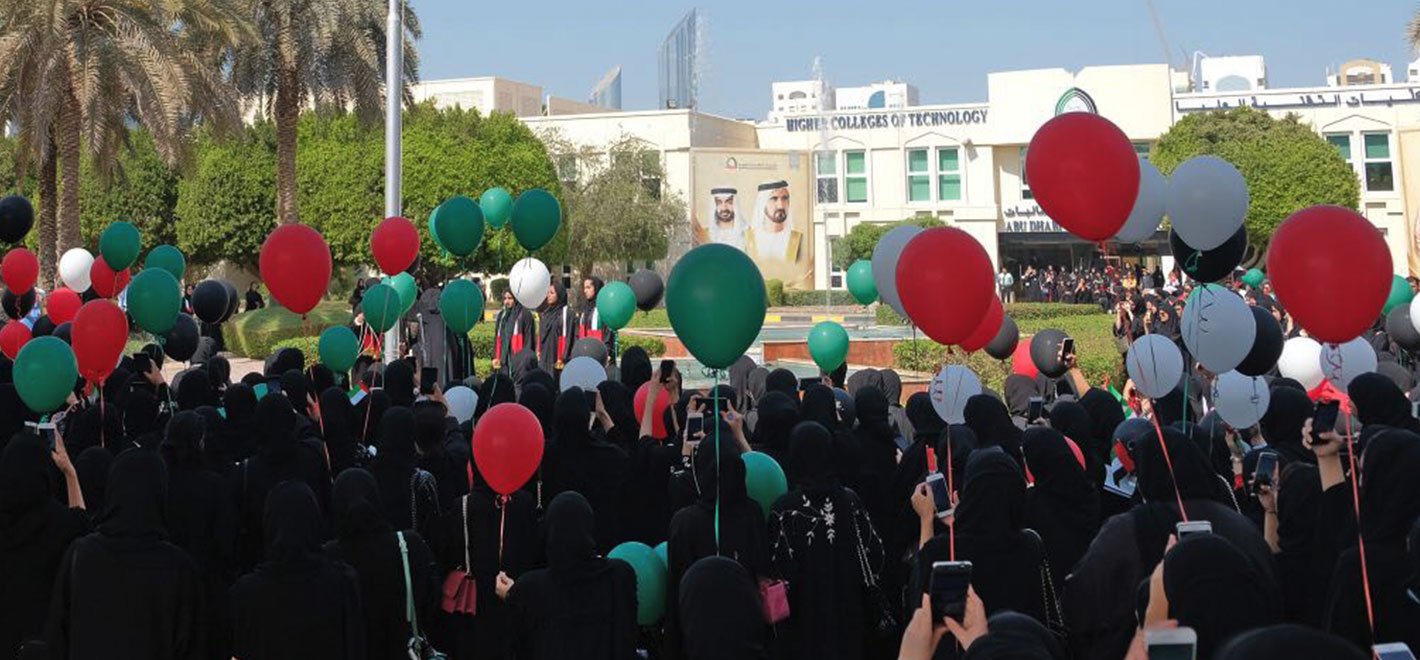
Students at the Higher Colleges of Technology will get formal training in turning business ideas into real companies, under a new partnership with the New Economy Academy announced in Sharjah on Friday. The programme will train 2,000 HCT students in entrepreneurship over five years, at a pace of 400 students a year. It is part of a national campaign that aims to train 10,000 Emiratis to start and run businesses.
The campaign is called The Emirates: The Startup Capital of the World, and it was launched by Sheikh Mohammed bin Rashid Al Maktoum, Vice President and Prime Minister of the UAE and Ruler of Dubai. The Higher Colleges of Technology, known as HCT, will contribute a fifth of the national target. The campaign also aims to attract 10,000 people from outside the UAE to set up and grow businesses in the country.
2,000 students, 400 a year, over five years
The numbers are deliberately steady rather than spectacular. Four hundred students a year is a cohort HCT can actually teach well, and five years gives the partnership time to learn what works.
The first phase of the inaugural cohort is already wrapping up, and the two institutions are talking about how to expand their work together. That matters, because a programme that starts strong and fades after one year helps nobody.
HCT brings scale. Its campuses already run business incubation centres that support students who want to start something, and the new training is meant to sit alongside them, so a student can learn the theory in class and test the idea in the incubator next door.
What the students will actually learn
Students join the core track of the academy’s Emirati Entrepreneurship Essentials programme. It starts with how entrepreneurs think and how the UAE’s startup landscape works, then moves into building a business model, planning finances, and working out how to set a company up. Pitching and marketing come later, once the idea has some shape.
The training sticks to the practical questions that stop most first-time founders.
Which rules apply to the business they want to start? What support is available, and from whom? What tax requirements do they need to understand?
Students also learn how artificial intelligence can help with product development, business planning and running a company, and how to read market data before committing to an idea.
They will learn to spot competitors and potential customers, and to judge honestly whether they have what it takes to compete. They will also prepare financial and marketing plans, so the idea leaves the classroom as something they can show to a bank, a partner or a customer.
A pitch panel on the final day
The programme ends the way a real startup journey does, with a pitch. On the final day, students present their business ideas to a specialist panel drawn from the academy and HCT, and get professional feedback on how to move from a concept to a working business. Promising ideas that are developed enough will be considered for support from relevant organisations, to help turn them into real businesses.
That final step is the difference between a course and a launchpad. Laila Faridoon, chief executive of the New Economy Academy, says the programme forms part of the national campaign, and that the academy wants to give young Emirati talent the knowledge and skills entrepreneurship demands. Ayesha Markhan, acting vice president of employability and knowledge economy at HCT, says the partnership gives students a career option beyond the usual path of graduating and finding a permanent job.
Part of a bigger national push
The HCT deal is not the academy’s first partnership of this kind. It is also working with the Arab Youth Centre on a programme to train 400 young Arabs, and with Dubai’s housing establishment on an Engineers Incubator that aims to create 50 Emirati-owned firms in contracting and engineering consultancy.
The campaign behind all of this wants the UAE to be known as the place where founders start. Training 10,000 Emiratis is one half of that promise. Bringing in 10,000 founders from abroad is the other half, and it is the harder one, since it means convincing people with options to pick the UAE over every other startup hub.
What 10,000 trained founders could mean for the UAE
Training 10,000 people to start businesses sounds impressive, but training is the easy part. The honest measure of this programme will be how many of the 400 students a year actually register a licence, find a first customer and survive their first year. HCT’s incubation centres give graduates somewhere to go next, which is more than most courses offer, and the pitch panel gives them a deadline that forces the idea into shape.
There is a risk worth naming too. Entrepreneurship taught in a classroom can drift into theory, and a certificate is not a company. The programme’s strength is that it mixes remote learning with in-person training and ends with a real pitch, which keeps it closer to practice than a lecture series.
If the academy and HCT publish how many graduates actually start businesses, the rest of the country’s training providers will have a standard to match. Until then, this is a promising start, and the numbers to watch are not the enrolments but the launches.