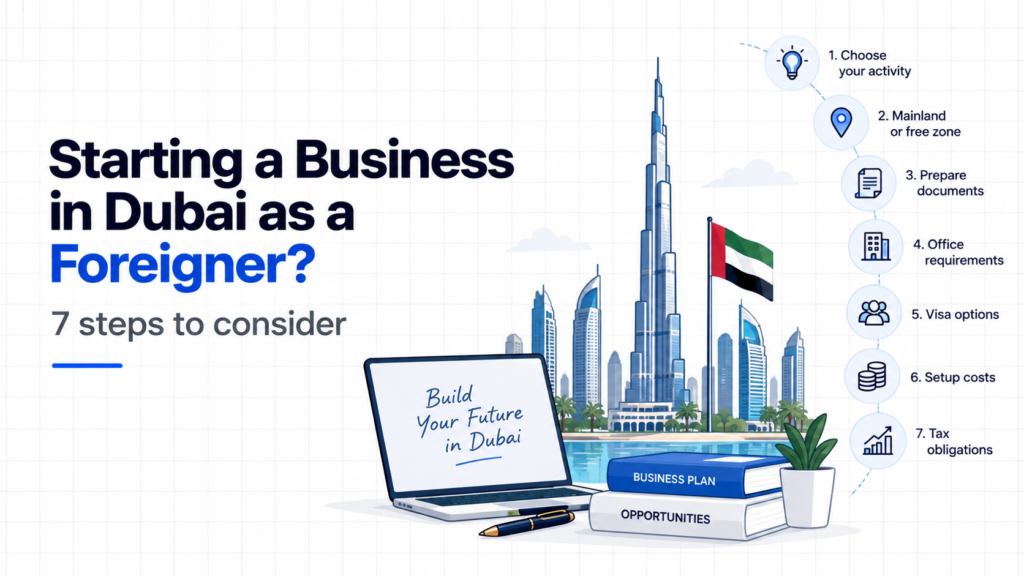
Starting a business in Dubai as a foreigner involves more than obtaining a trade licence. You first need to choose an activity that matches your business, decide where to register it, and select a suitable legal structure.
You also need to understand the documents, office requirements, visa options, setup costs, and tax obligations that apply to your company. With several mainland and free zone options available, choosing the right setup can affect how easily you operate and serve customers in the UAE.
This comprehensive roundup breaks down the process into seven practical steps for foreign founders.
Table of Contents
Can a foreigner start a business in Dubai?
Yes. Foreigners can start and own businesses in Dubai, with 100% foreign ownership available for more than 1,000 commercial and industrial activities. Some strategically important activities have specific ownership or regulatory requirements, so the rules depend on the activity you choose.
Foreign founders can choose between mainland and free zone setups. A mainland company can trade directly across the UAE, while free zone companies operate under the rules of their respective free zone authorities. A free zone company that wants to trade in the UAE mainland needs the relevant license or may establish a mainland branch.
Dubai also makes the setup process largely digital, with 99.5% of government services available online. The UAE has 0% personal income tax and allows investors to fully repatriate their capital and profits.
For eligible founders, Dubai also offers residency options, while its location connects businesses with markets across Europe, Asia, and Africa.
How to start a business in Dubai as a foreigner
Step 1: Choose your business activity
Start by deciding what your company will sell or provide. Dubai’s Invest in Dubai portal lets you select a primary activity and add secondary activities where needed. Your choice determines the license and legal structure available to you and whether additional approvals are required.
You can use its Search Business Activities tool to find the exact activity, its activity code, and whether it is available for foreign ownership. You can also filter results to show activities that permit foreign ownership.
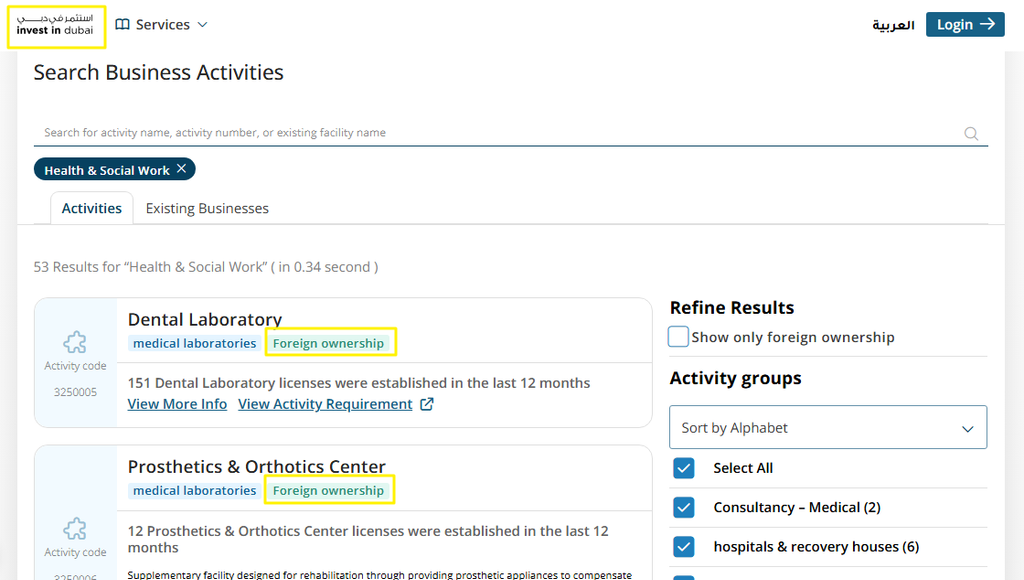
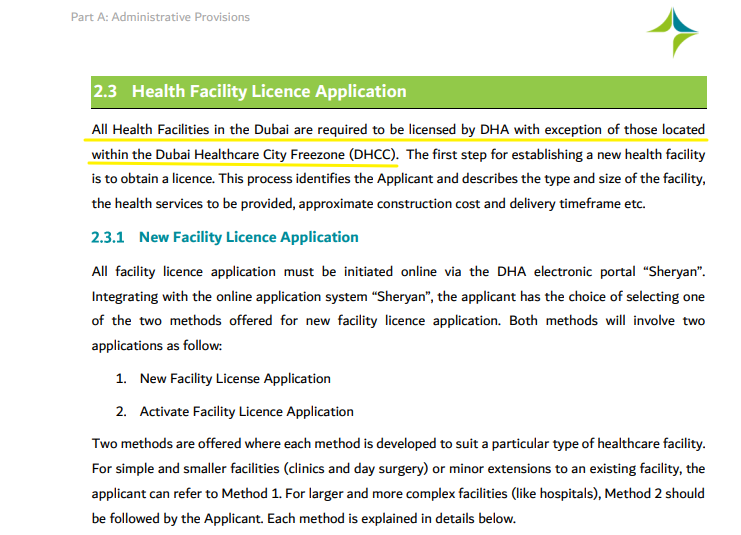
Some activities are regulated and require approvals from other government authorities. For example, healthcare facilities may need approvals from the Dubai Health Authority, Dubai Municipality, and Dubai Civil Defense, while facilities using certain radiology equipment may also need approval from FANR.
Step 2: Choose between mainland and free zone
Dubai gives foreign founders two main setup routes. Your choice depends mainly on where you plan to operate and how you want to structure the business.
Mainland
A Dubai mainland company is registered outside a free zone and can trade directly with customers and businesses across Dubai, the wider UAE, and international markets. You generally need a physical business address, while some activities may require additional approvals.
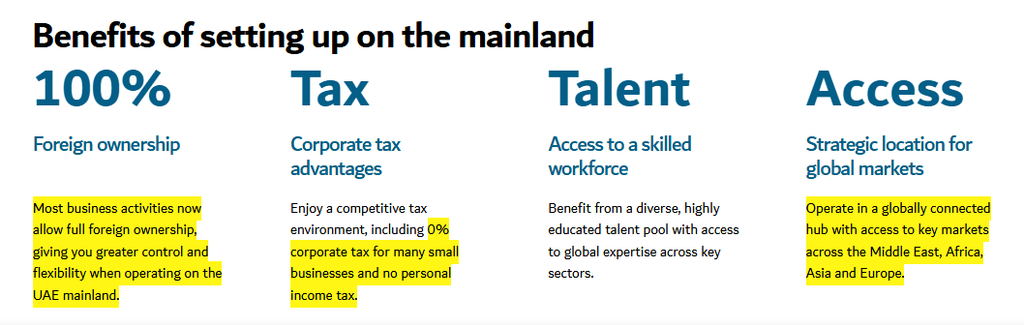
- Suitable for businesses that want to sell directly to customers and companies across Dubai and the wider UAE. Under current rules, more than 1,000 commercial and industrial activities allow foreign ownership.
- 7 license types, including Commercial, Industrial, and Professional licenses, cover common trading, manufacturing, and service businesses. Dubai also offers E Trader, Dual, Instant, and SME licenses for specific business models.
- An LLC can have between 2 and 50 partners, with each partner’s liability limited to their share of the capital.
- Mainland companies can sell to individuals and businesses across Dubai and the wider UAE, and operate internationally.
- Best for Retail, trading, consulting, construction, logistics, and other businesses that need to operate directly in the UAE market.
Free zone
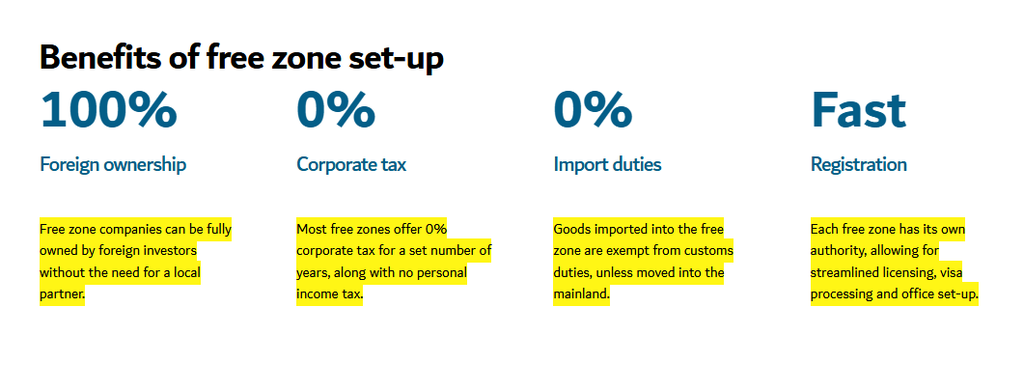
Dubai has more than 20 free zones, each independently regulated and often focused on specific sectors. They offer 100% foreign ownership, different license options, and flexible company structures. However, a free zone company cannot directly trade in the UAE mainland unless it obtains the relevant license or establishes a mainland branch
- 5+ legal structures are needed, including FZE, FZCO, private LLC, PJSC, and branches of local or international companies.
- Some freelance packages start at AED 5,000. Office costs vary; offices for four start at AED 62,500 on the official Dubai Government guide.
- Best for Startups, freelancers, international businesses, and companies that mainly serve clients outside the UAE or operate within the free zone ecosystem.
- Companies can choose structures such as a sole establishment, multi-shareholder company, or branch.
- Goods imported into the free zone are exempt from customs duties, unless moved into the mainland.
- Most free zones offer 0% corporate tax for a set number of years, along with no personal income tax.
Dubai has more than 20 free zones. Some examples include:
- DMCC
- Dubai South
- Dubai Silicon Oasis
- Dubai International Financial Center
- Dubai CommerCity
- Dubai Healthcare City
- Dubai Design District
This makes the decision clearer. Choose mainland if direct UAE market access is central to your business; consider a free zone if your business fits a specialized zone and your operating model does not require unrestricted mainland trading.
Here is a simple comparison:
| Factor | Mainland | Free Zone |
| Foreign ownership | 100% for most activities | 100% |
| UAE mainland access | Direct | Subject to applicable rules and permits |
| International trade | Yes | Yes |
| Authority | Dubai Department of Economy and Tourism | Individual free zone authority |
| Office requirements | Registered premises generally required | Depends on the free zone |
| Best suited for | Businesses targeting the UAE market | International, specialized and sector-focused businesses |
Step 3: Choose your business structure and trade name
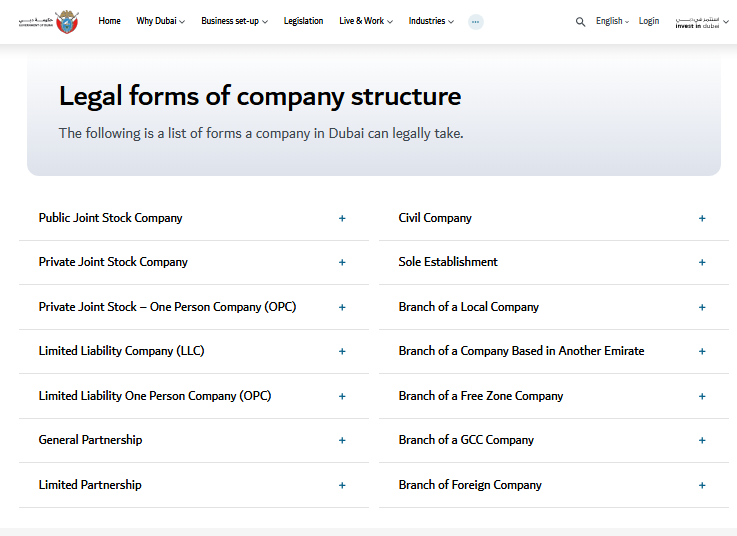
After choosing mainland or free zone, select the legal form that fits how you will own and operate the business. Dubai recognizes several structures, from single-owner businesses to partnerships, joint stock companies, and branches of existing companies.
For most foreign founders, the main options to consider are:
- LLC: Requires 2 to 50 partners. Each partner is liable only up to their share of the company’s capital.
- One Person LLC (OPC): Can be established and fully owned by one individual or company, including a person of a nationality other than UAE.
- Sole Establishment: Owned by one person, who remains personally liable for all financial obligations of the business.
- Civil Company: Owned by 2 or more partners practicing professional activities such as consultancy, training, tailoring, or beauty services.
- General Partnership: Has 2 or more partners, with all partners personally liable for the company’s obligations.
- Limited Partnership: Has one or more general partners with personal liability and one or more limited partners whose liability is limited to their capital contribution.
- Branch of a Foreign Company: Allows a company established outside the UAE and GCC to operate in Dubai and conduct the same activity as its parent company.
- Joint Stock Company: A private joint stock company requires 2 to 200 shareholders, while a public joint stock company divides its capital into negotiable shares and can offer shares to the public.
Dubai also provides legal forms for branches of companies based in another emirate, free zones, and GCC countries.
Next, reserve your trade name through Invest in Dubai. The name must be unique, relevant to your business activity, and compliant with Dubai’s naming rules. The official trade name reservation service costs AED 620 and can be completed online, with the stated service completion time of 10 minutes.
For most foreign founders, the key decisions at this stage are the ownership structure, partner liability, and whether the proposed trade name is available.
Step 4: Get initial approval and prepare for the next stage
Initial approval is a declaration of no objection (DNO) for certain businesses. It is mandatory for some licenses, including many industrial licenses. In Dubai, you obtain this approval alongside trade name booking, allowing you to proceed with requirements such as location registration and Ejari.
Ejari is Dubai’s official system for registering tenancy contracts. When your business requires physical premises, the tenancy contract for that office or facility must be registered through Ejari.
For industrial businesses, the UAE Ministry of Industry and Advanced Technology also uses an Initial Approval Certificate for activities such as factory construction, connecting to the power grid, importing machinery and equipment, and pilot production.
The MoIAT service requires an industrial license or registered trade name from a local authority. Applicants must also meet specific conditions, including:
- 10 or more employees
- At least AED 250,000 in factory capital
- Valid identification documents such as an Emirates ID or passport
- Compliance with UAE requirements covering industrial security, public health, and environmental protection.
Step 5: Get your business license
Dubai offers different ways to complete the licensing process depending on your business and the approvals it requires.
For a standard trade license, you may need the Memorandum of Association (MoA) and a site lease contract. Activities that require approval from another government authority must also receive those approvals before the license can be issued.
For eligible businesses, Dubai also provides faster options:
- Instant License: Issued within 5 minutes for activities that do not require external approvals. You can use a virtual business site during the first year.
- E Trader License: Designed for a sole establishment operating from home and selling products or services through online and social media channels.
- Normal license: The stated service completion time is 10 minutes, although the full setup can take longer when premises, documents, or external approvals are involved.
Step 6: Apply for visas and open a business bank account
Once your company is licensed, you can arrange residency and banking for your business.
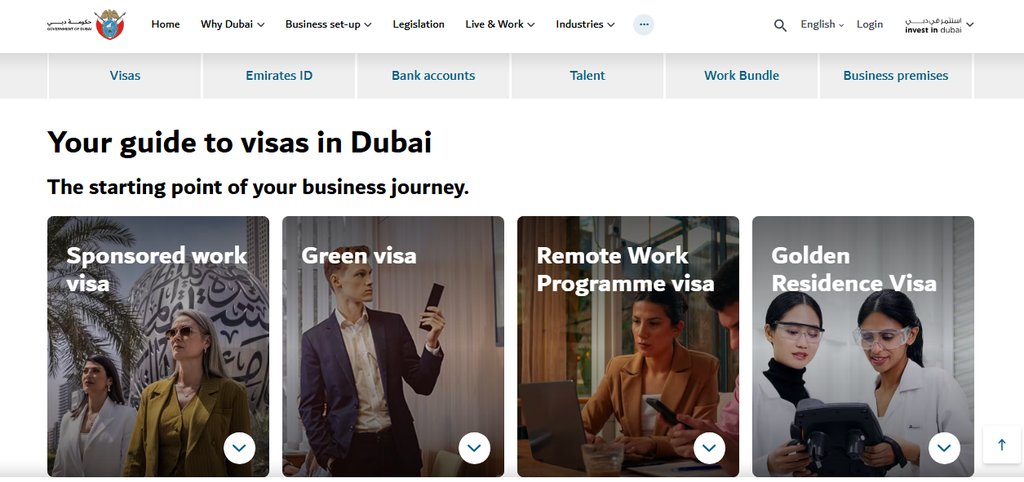
For foreign founders, Dubai offers several visa routes:
- 5-year investor visa: Foreign investors can qualify by investing at least AED 500,000 in a UAE business, or through an approved UAE business incubator route for eligible startup owners.
- 10-year Golden Residence: Available under specific categories for investors, entrepreneurs, and other eligible professionals.
- 1-year remote work visa: Available to people working remotely for an employer or business outside the UAE, subject to the program requirements.
- Emirates ID: Once you obtain your residence visa, you can apply for an Emirates ID, which is required for people living and working in the UAE.
You can then apply for a business bank account. Invest in Dubai notes that receiving or applying for an Emirates ID makes you eligible to apply for a bank account, while individual banks set their own requirements.
For employees, foreign workers need both a residence visa and a work permit. An employment entry permit allows up to 60 days to complete the residence visa process.
Step 7: Register for taxes and meet ongoing requirements
After setting up the company, a foreign founder must complete the registrations and reporting requirements that apply to the business.
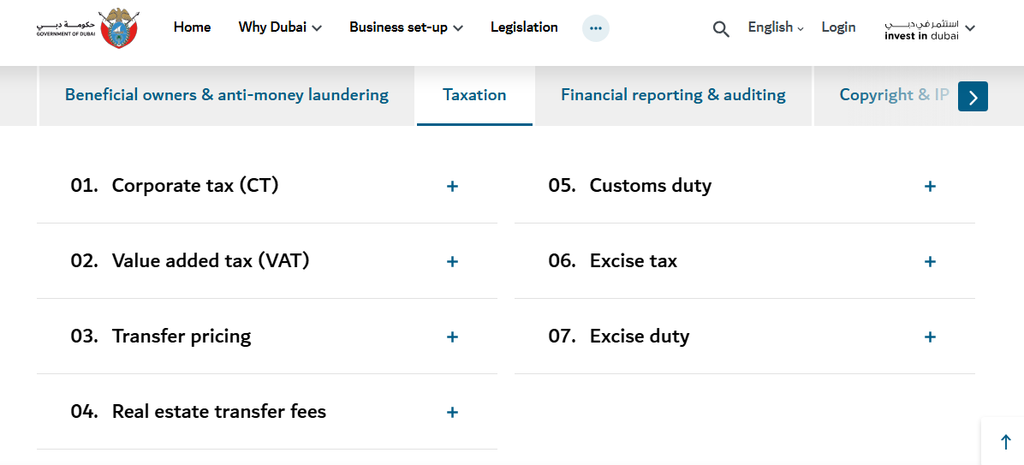
- Corporate Tax: Mainland companies pay 9% on net income or profit above AED 375,000 per year. The tax treatment of free zone companies depends on the applicable rules and conditions.
- VAT: The standard VAT rate is 5%. Registration is mandatory when taxable supplies and imports exceed AED 375,000 annually. Voluntary registration starts at AED 187,500.
- UBO declaration: Every licensed mainland and free zone company must declare its Ultimate Beneficial Owners.
- Financial records: Companies must maintain financial records and obtain an annual audit report. Companies must keep audit records for 5 years.
- Transfer pricing: Businesses with transactions between related parties may need to follow UAE transfer pricing rules and maintain supporting documentation when applicable.
- Customs: Most imports are subject to 5% customs duty based on the CIF value, although specific free zone and product rules apply.
This is the point where the foreign founder moves from setting up the company to running it in compliance with UAE requirements.
How Much Does It Cost to Start a Business in Dubai?
Starting a business in Dubai can cost around AED 5,000 to AED 84,500+, depending on the license, business activity, office, visa requirements, and whether you choose a mainland or free zone setup.
For example, some free zone freelance packages start at AED 5,000, while office space for four people can start from AED 62,500. In DMCC, a typical first-year setup costs around AED 35,000 to AED 50,000, including registration, license, and a flexi desk. Additional costs can include visas, office rent, approvals, and other government fees, so your actual budget will depend on how you plan to operate.
Documents Required to Start a Business in Dubai
The exact documents depend on your legal structure, business activity, and whether you set up on the mainland or in a free zone. For a typical foreign founder, prepare the following:
1. Passport and Visa Documents
You need a copy of the license holder’s passport if you are a non-UAE resident. UAE residents can provide their Emirates ID. Non-GCC applicants may also need a copy of their residence visa or entry permit. You must have a valid tourist or visit visa before applying for a mainland license.
2. Business and Partner Details
The application requires information about the business, its activity, and its owners or partners. Partner details can include address, contact information, Emirates ID, passport number, unified number or UID, role in the company, and ownership percentage.
3. Trade Name Documents
You need an approved or reserved trade name linked to your business activity and legal structure. The trade name reservation costs AED 620 according to the provided source.
4. Memorandum of Association or Articles of Association
Depending on your legal structure, you may need an MoA or Articles of Association. For mainland companies, you may need a duly attested MoA after initial approval. DET issues MoAs for LLCs, one-person companies, and civil companies, while other legal forms may require a notary. A one-person LLC does not require an MoA under the stated requirements.
5. Initial Approval Documents
Some businesses, including many industrial activities, require an initial approval certificate before proceeding with licensing. The application can involve passport copies, application forms, and business details. For a foreign entity branch, the provided source states that the initial approval is valid for four months and costs AED 3,500.
6. Office and Ejari Documents
If your business requires physical premises, you need a tenancy contract and registered business address. For mainland companies, you must register the lease through Ejari. The office arrangement can also affect your visa allocation.
7. Legal and Service Contracts
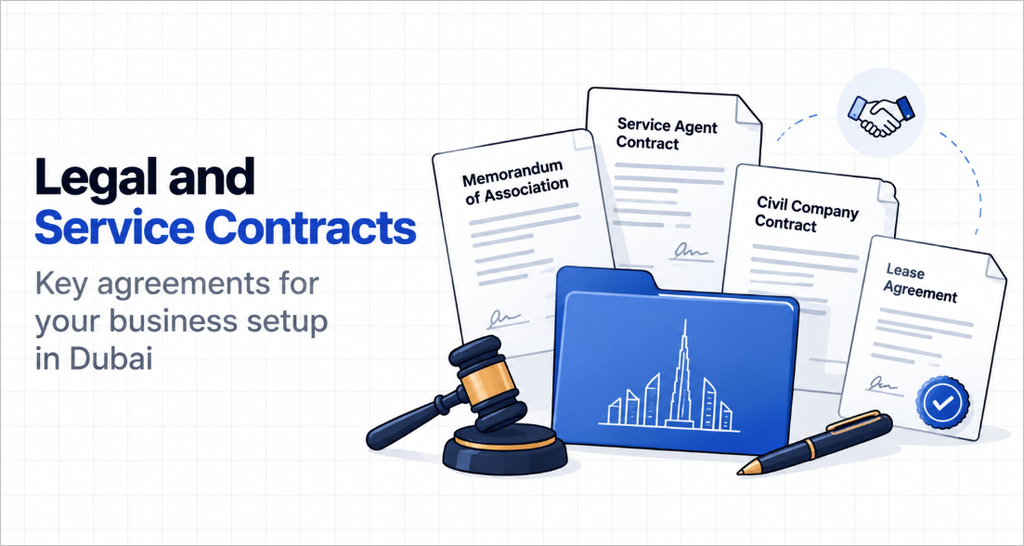
Depending on the company structure, you may also need service agent contracts, civil contracts, or other legal agreements. Relevant stakeholders submit these documents for signing through the Invest in Dubai platform. Some example contracts are:
- Memorandum of Association (MoA)
- Local Service Agent Agreement
- Civil Company Contract
- Service Agent Contract
- Lease or Tenancy Contract
- Parent Company Documents for branches
How Long Does It Take to Set Up a Business in Dubai as a Foreigner?
You can set up a business in Dubai in as little as 5 minutes to several weeks, depending on the license, business activity, and required approvals. An Instant License can be issued within 5 minutes for eligible activities that do not require external approvals.
Standard licenses can also have a stated service completion time of around 10 minutes, but the full setup takes longer when you need office space, legal documents, visas, or approvals. For example, DMCC states that its typical company setup takes around 2 to 3 weeks.
Is Dubai a Good Place for Foreign Entrepreneurs?
Dubai has built a strong base for startups seeking funding, talent and international connections. About 86% of the UAE’s startups are based in Dubai, while the emirate receives more than 90% of the country’s startup funding. The ecosystem includes 380+ venture capital funds and has attracted US$7.5 billion in venture capital investment since 2019. Dubai also aims to scale 30 unicorns by 2033, giving ambitious founders access to an ecosystem designed for startup growth.
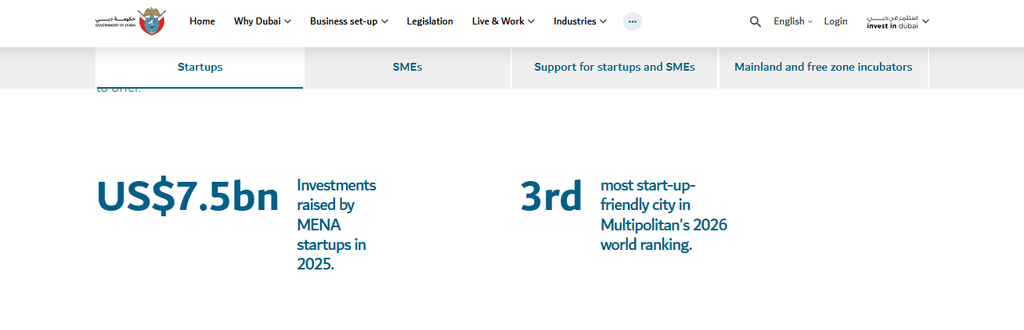
In 2025, the Dubai Chamber of Digital Economy supported the establishment and expansion of 1,690 digital startups, marking a 39.7% increase from 2024. AI startups accounted for 15% of the supported businesses, while fintech represented 12%. Mobility tech, SaaS, and ecommerce made up 20% of the total, and 75% of the startups were global companies.
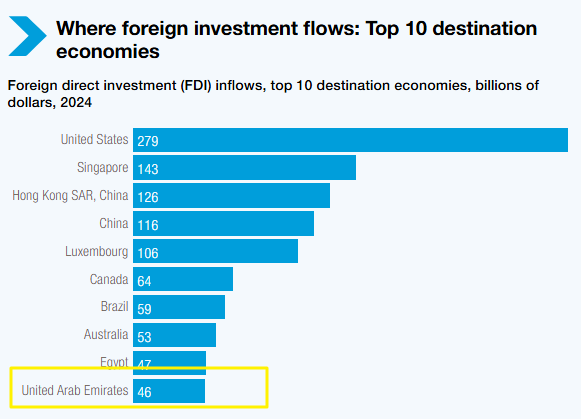
The wider UAE also strongly appeals to international investors. The country attracted $46 billion in FDI in 2024, ranking 10th among the world’s top destination economies. This combination of startup growth and international investment makes Dubai an attractive base for foreign entrepreneurs looking to enter regional and global markets.
Conclusion: Start Your Dubai Business With Confidence
Starting a business in Dubai as a foreigner is a structured process, from selecting the right business activity and legal structure to securing your licence, visa and required approvals. The key is to understand the requirements before committing to a mainland or free zone setup.
Dubai’s growing digital startup ecosystem, international business community and strong investment inflows also create opportunities for foreign entrepreneurs. With the right activity, business structure and budget in place, you can build your company on a clear foundation and begin operating in one of the UAE’s major business hubs.