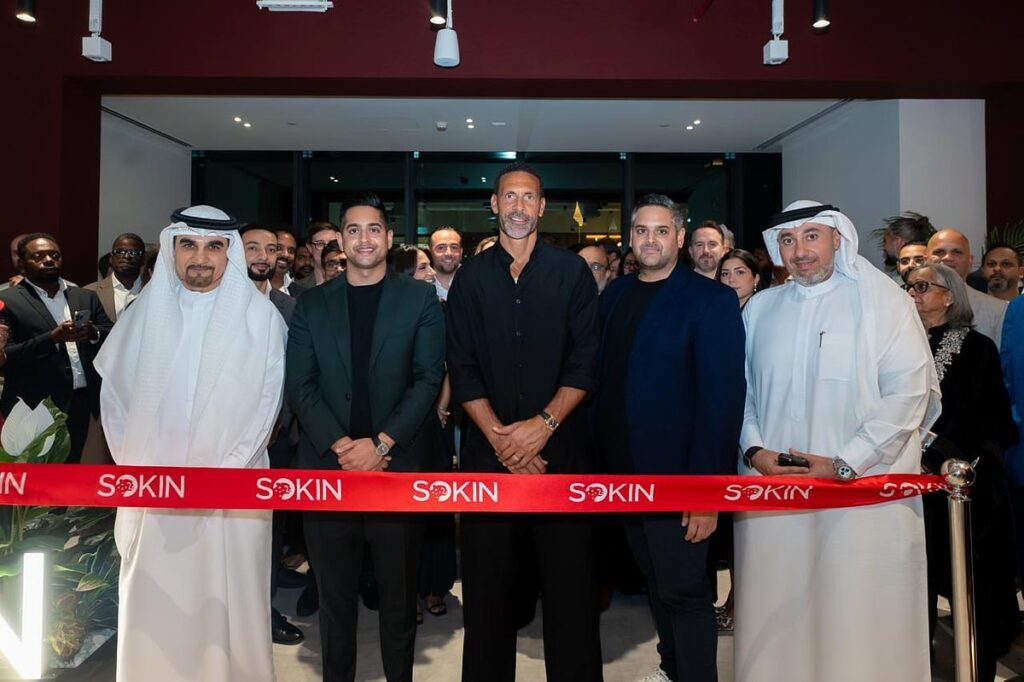
Global payments firm Sokin has secured a licence from the Dubai Financial Services Authority and opened a new office at One Zaabeel, with plans to grow its local team to 100 people. The move lets UAE businesses hold dirham accounts through Sokin for the first time, with the dirhams held by Ruya Community Islamic Bank. It caps a Dubai build-up running quietly for almost three years.
Sokin was founded in London in 2019 by Vroon Modgill, and it now moves more than 11 billion dollars a year for businesses across 170 countries, in more than 70 currencies. The company holds licences in 36 countries, runs eight offices and has raised more than 100 million dollars from investors including Morgan Stanley Expansion Capital and Prysm Capital.
Three years of groundwork before the big bet
Sokin did not arrive in Dubai overnight. It entered the UAE almost three years ago as a strategic partner of Seed Group, a company of the Private Office of Sheikh Saeed bin Ahmed Al Maktoum, and it has been building local relationships since.
This is not a satellite office for us, Modgill says. We have a proven business model and we are doing 100 per cent year-on-year growth.
The local team stands at about 65 people, and hiring will focus on partnerships, working with fintechs and software platforms that build Sokin accounts into their own products. Modgill says the company aims to double its transaction flow next year. A launch event in Dubai on 12 November marked the opening.
What the licence actually unlocks
The licence came through Sokin’s Dubai International Financial Centre office, where it is regulated as a Money Service Provider with a Category 3D licence. It covers issuing payment instruments, executing payment transactions, account information and payment initiation services, plus advising on and arranging money services. In plain terms, Sokin can now offer regulated payment services from inside the DIFC.
The dirham account is the part UAE businesses will notice first. Ruya Community Islamic Bank, licensed by the Central Bank of the UAE, holds the dirham deposits, so a business can hold dirhams in its Sokin account alongside 28 other currencies. Platform partners also get embedded local payment rails for moving money into and out of the UAE.
One platform instead of thirty
Modgill argues that price is the wrong place to compete. A company operating in ten countries often juggles ten banking partners, ten accounting platforms and ten payment methods, which adds up to roughly thirty platforms.
What we decided as a team very quickly is what if we just condense that into one, he says. Chasing rivals on price would backfire, he warns.
In a pricing war, I might win one transaction, that is about it. Retention matters more, with existing customers doing more business through Sokin each month.
Stablecoins and artificial intelligence feature in the pitch. This year Sokin launched stablecoin accounts and settlement, plus a connector that lets finance teams send payments through the AI tools they already use.
The company bought a settlement infrastructure firm in March. Modgill spent 18 months studying stablecoins before moving, and he says customers rarely care which rail carries a payment, only that it settles instantly. On AI, he is careful: licensing still needs a human touch, and Sokin uses AI for operational efficiency instead.
The Seed Group filter and the Rio Ferdinand connection
Seed Group picks its partners selectively. Hisham Al Gurg, its chief executive, says the group looks at more than 2,000 companies a year and backs fewer than 20.
Its role, as he describes it, is simple: to help them succeed. For Sokin, that meant introductions to key accounts and decision makers, plus help navigating the local business environment while the licence application ran its course.
Rio Ferdinand, the former England and Manchester United defender, is an early investor in Sokin and has stayed involved, using his network to open doors and build the company’s profile. The football connection also brought a partnership with Manchester United, and Ferdinand was at the Dubai launch event. In December 2025 Sokin raised 42.9 million euros, about 50 million dollars, in a Series B round led by Prysm Capital, valuing the company at 257 million euros, about 300 million dollars.
What Sokin’s Dubai bet means for UAE firms that pay across borders
Sokin’s approach is the opposite of the usual fintech launch story. Most newcomers arrive with noise and chase customers before they have permission to serve them.
Sokin spent three years building relationships, waited for the licence, and only then started talking about growth. That patience is worth noting, because a payments licence in the DIFC is not a marketing claim. It is a regulator saying the firm can be trusted with other people’s money.
The real test is not the office or the headcount. It is whether mid-sized UAE businesses that already juggle several banks will move their dirham flows onto one platform.
A dirham account next to 28 other currencies is genuinely useful for a trading firm, and the embedded rails could matter even more for software platforms. But switching banks is a chore, and finance teams only do it when the saving is obvious. If the first 100 hires prove that saving customer by customer, the bet will pay off.