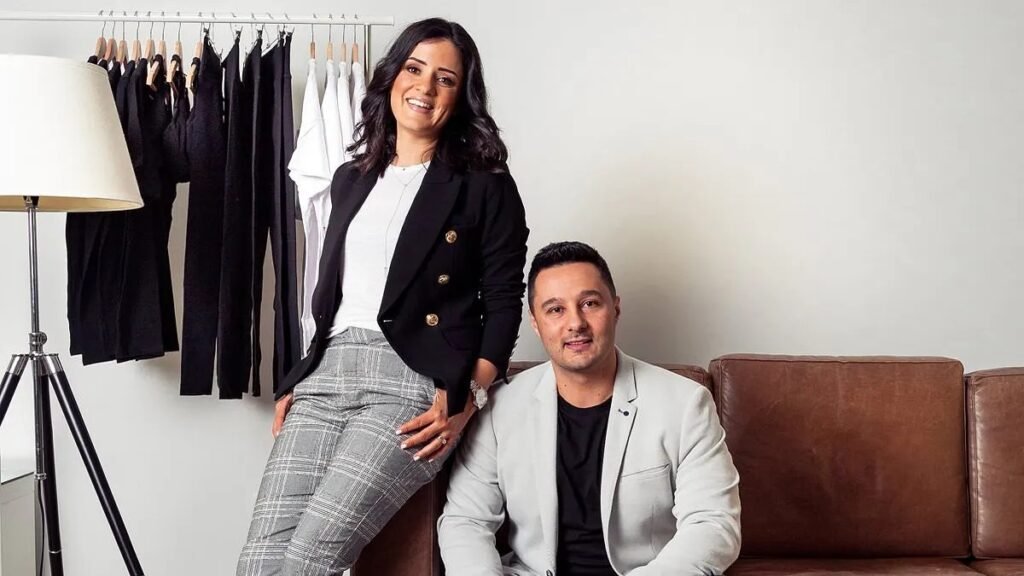
Simon Rawadi has spent twelve years helping other people build clothing brands. Now the Melbourne entrepreneur is making a move of his own, and it takes his family to Dubai.
Rawadi, who founded activewear company Slyletica with his wife Yetta in 2015, will move his family to Dubai in February 2027 to lead the company’s global expansion. The business itself will stay based in Melbourne, and Rawadi says Australia will always be home.
Twelve years building brands for other people
Slyletica works behind the scenes of the fashion world. It helps founders design, produce and launch clothing, beauty and lifestyle brands, handling the product side so new labels can get to market without building a factory team of their own.
The numbers behind that work are striking. The company says it has helped launch more than 1,000 brands, and that those clients have generated over 120 million dollars in revenue between them. Rawadi has described the business as the product of a decade of long days, starting from a small operation and growing it brand by brand.
The journey has not been a straight line. Slyletica was ranked 84th on a national list of Australia’s fastest growing startups in 2018, and Rawadi was named Young Entrepreneur of the Year in Melbourne in 2019. Then the pandemic hit, revenue fell by more than half in 2021, and the couple spent the years after rebuilding the business and rethinking how it should work.
The bill that summed up the frustration
Rawadi says the decision to move comes down to the cost and complexity of running a business in Australia. He points to a long list of charges that pile up on top of normal trading: business activity statements, superannuation, payroll tax, workers compensation and corporate filing fees.
He recalls one bill of 250,000 dollars as the moment the frustration became concrete. It was not a single tax, he says, but the feeling that every part of the system took a cut before the business itself got paid. For a founder who had already survived a pandemic collapse, that weight became hard to justify.
The complaint is not just one founder’s view. CPA Australia estimates that taxpayers spend about 60 billion dollars a year complying with the tax system, with small and medium sized businesses carrying more than half of that burden. The body has argued that simpler rules would free up time and money for hiring, investment and growth.
What the Dubai move actually changes
The move is a relocation of the founder, not the company. Slyletica’s Melbourne base and team stay in place, while Rawadi leads the push into new markets from Dubai. It is a familiar pattern for Australian founders who want a base closer to customers in the Middle East, Europe and Asia without giving up the operation they built at home.
Rawadi has also said he plans to document the move and the expansion openly, including the launch of two new brands. That habit of sharing the process in public has already built him an audience of founders who follow his posts about product, pricing and the unglamorous parts of running a brand.
For Dubai, the arrival fits a wider trend. The city has spent years pitching itself to founders as a place where setting up is fast, taxes on personal income are low and the airport puts most of the world within a day’s travel. Each founder who moves adds another story to that pitch, and another reason for the next one to look closely.
What Rawadi’s move says to founders weighing Dubai
Rawadi’s story is useful because it is not a fairy tale about overnight success. He built a real business, survived a collapse, rebuilt it, and still decided the maths worked better somewhere else. That is a different message from a founder who moves for the lifestyle photos, and it is one other founders will take seriously.
Dubai should read it the same way. Founders like Rawadi do not arrive looking for a handout. They arrive with a working business, a team and a network, and what they want most is a place that stays out of their way.
If the city keeps its promise of simple rules and fast decisions, it will keep winning people like him. If it starts to feel like the system he left behind, the same founders will be just as quick to move on.