Mohammed Ibrahim did not set out to build a perfume empire. He opened a small shop in Dubai in 2011, selling oil fragrances made from raw materials sourced around the world.
Fifteen years later, the company he founded, Emirates Pride, sells more than 45 products through stores across the Gulf, and its scents now reach travellers through Dubai Duty Free and Sharjah Duty Free.
This week, Ibrahim spoke about the journey in a wide ranging interview, explaining how a house rooted in Emirati tradition learned to compete with the biggest names in global perfumery.
A small Dubai shop with a big idea
Emirates Pride began in 2011, when Mohammed Ibrahim and his brother Ayoob opened a modest shop on Sheikh Zayed Road. Their first focus was oil fragrances, made by importing fine raw materials and blending them into scents that felt familiar to Gulf customers.
The vision from the start was to become the most distinguished perfume company in the Middle East. That meant building a house, not just a shop, with its own products, its own stores and its own identity.
Growth came steadily. The brand now counts more than 30 outlets across the Gulf, alongside an online store that ships around the world, and its catalogue has grown to more than 45 products.
The record that put the house on the map
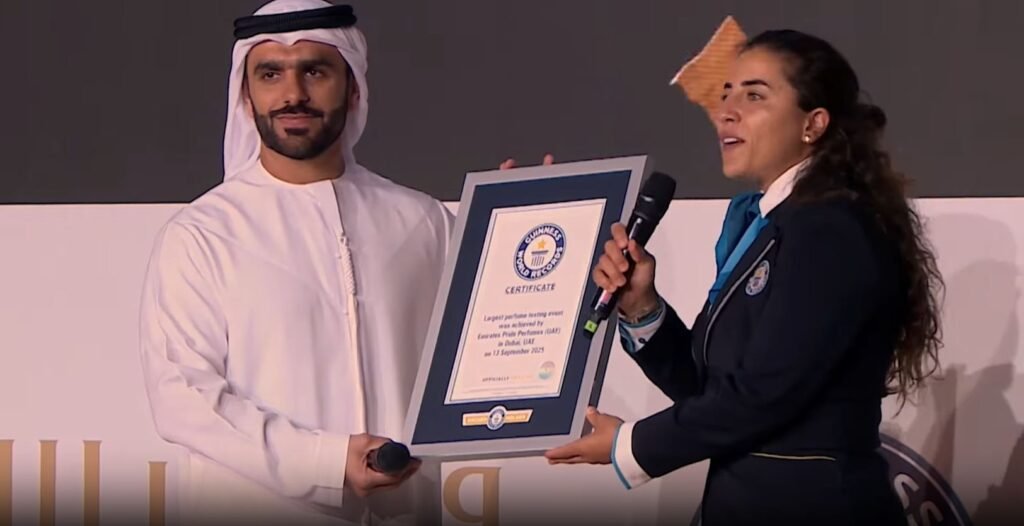
One of the brand’s defining moments came from asking its own customers to choose. Emirates Pride invited the public to take part in the largest perfume testing event ever held, and the effort earned a Guinness World Records certificate.
The winning scent became Midnight Bloom, a fragrance shaped directly by the people who tried it. It was a public vote of confidence, and it gave the brand a story no advertising budget could buy.
Ibrahim says the approach fits how the house thinks about perfume. He believes a fragrance should begin with a concept and a purpose, not simply a combination of ingredients, and the record showed customers agreed.
Old rituals, new chemistry
The house has also reworked one of the region’s oldest rituals. Its Future Tradition collection recreates the aromas of burning oud and bakhoor in wearable formats, after more than 400 trials, and it uses fewer natural resources than burning the real thing.
Earlier this year, Emirates Pride said it would stop burning bakhoor altogether, becoming the first Arabic perfume house to take that step. The move was framed as a way to preserve a tradition for future generations rather than consume it.
Behind the scents sit some of the most respected names in perfumery. The house has worked with master perfumers including Alberto Morillas, Dominique Ropion, Olivier Cresp, Nathalie Lorson and Hamid Merati Kashani, and its MASTERS perfume was created with Cresp and Lorson.
From duty free shelves to world stages
The next chapter is international. Emirates Pride showed its collections at the TFWA World Exhibition in Cannes in September, and it already sells through Dubai Duty Free and Sharjah Duty Free, where travellers meet the brand for the first time.
Ibrahim says the goal is to build a lasting presence in France, Spain, London and beyond over the next three to five years. Travel retail sits at the centre of that plan, because it puts Emirati fragrance in front of people who may never have tried it.
He is clear that the fragrance itself has to do the work. Cultural storytelling can enrich the discovery, he says, but the quality, character and emotional appeal of the scent decide whether a customer comes back.
What Emirates Pride means for Emirati brands going global
The lesson of this story is not that heritage sells itself. Plenty of brands trade on tradition and go nowhere. Emirates Pride turned heritage into a method, testing scents in public, reworking rituals with real chemistry and hiring the best noses in the world to get the formulas right.
There is also a quiet confidence in the way Ibrahim talks about expansion. He is not chasing novelty or copying Paris. He is asking the world to meet Emirati perfumery on its own terms, and building the stores, partnerships and products to make that meeting happen.
For founders building from the Gulf, that is the useful part. A local story, told honestly and made well, can travel further than a borrowed one, and the world is clearly ready to smell the difference.