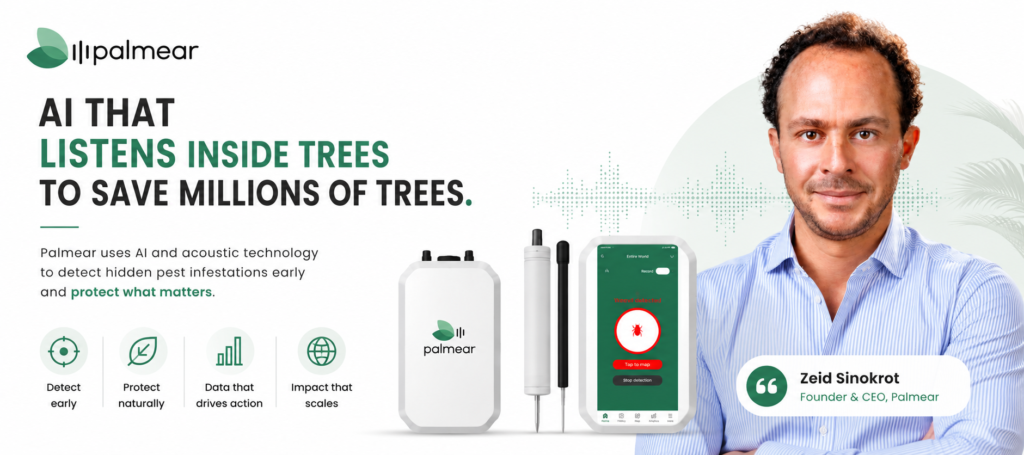
What does it take to build a startup that protects millions of trees? For Zeid Sinokrot, it meant spending years solving a problem most people could not even see. His company, Palmear, combines AI and acoustic technology to detect hidden pests and is now gaining global recognition for its impact on agriculture.
In this startup story, we look at how Zeid Sinokrot turned one overlooked agricultural problem into Palmear, a globally recognized AI startup making farming smarter and more sustainable.
It Started With One Question: Why Are Healthy Trees Dying?
Seven years ago, Zeid Sinokrot was not planning to build an AI company. He was trying to solve a problem that had frustrated farmers for decades.
Across the Middle East, healthy-looking date palms were dying without warning. The culprit was the Red Palm Weevil, a pest that spends most of its life hidden inside the tree. By the time the first signs appear, the damage is often beyond repair.
For Zeid, this was more than an agricultural challenge. Date palms are part of the region’s identity. They support food production, create jobs, and have been part of life in the Middle East for generations. Nearly 50 million farmers depend on them, yet there was no practical way to detect infestations early enough to save the trees.
Instead of asking why nobody had solved the problem, Zeid asked a different question: What if we could detect the pest before the tree showed any symptoms?
That question became Palmear AI.
Teaching AI to Hear What Humans Cannot
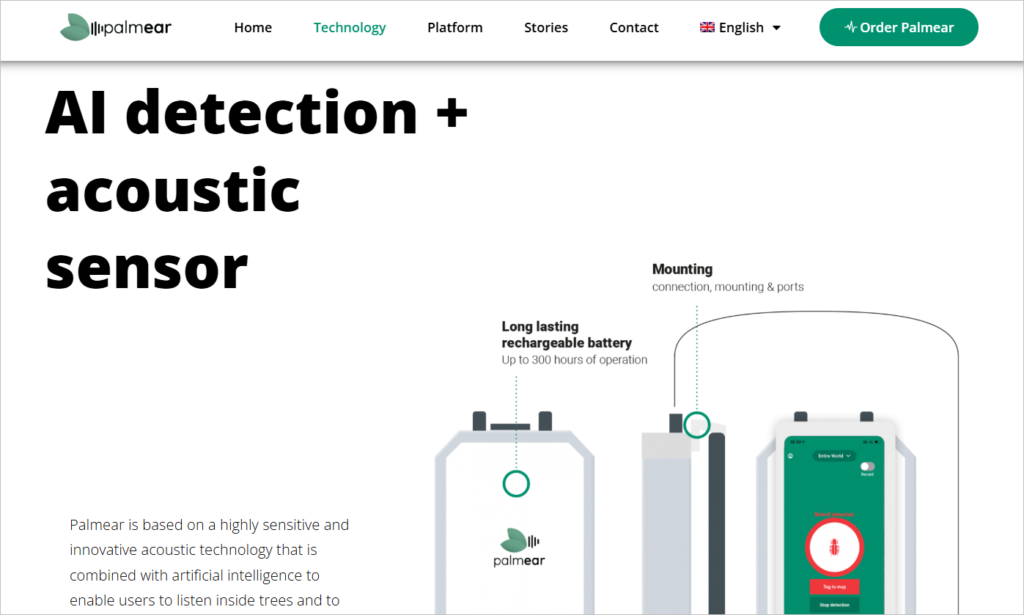
Zeid and his team wanted to build technology that could listen inside a tree and identify tiny sounds made by young Red Palm Weevil larvae before they caused visible damage. If they could detect the pest early, farmers could treat a single tree instead of losing an entire plantation.
But the first versions did not work outside the lab.
The AI performed well in controlled environments, but real farms were noisy. Wind, birds, insects, machinery, and changing weather confused the system. The team had to go back to the drawing board again and again.
Over the next few years, they redesigned sensors, retrained AI models, and collected more than 700,000 minutes of real world acoustic data. Every failed test helped improve the technology. Every field visit made the system smarter.
Today, Palmear allows a farmer to connect a small acoustic sensor to a mobile phone, insert it into the tree for less than a minute, and receive an AI powered diagnosis almost instantly. The device is portable, non invasive, easy to use, and affordable enough to work at scale.
Building More Than a Detection Device
Palmear has evolved into an AI platform that helps farmers, governments, and agricultural organizations make better decisions. The platform can map infestation hotspots across farms and even entire countries, monitor pest populations, generate reports, and support Integrated Pest Management programs.
It is also expanding into soil health and environmental monitoring, helping agriculture become more sustainable.
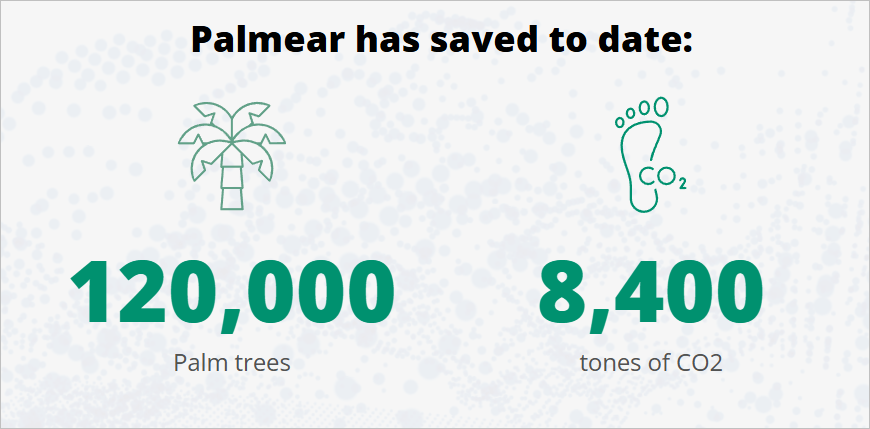
The results are already making a difference. Palmear has helped protect more than 120,000 palm trees and prevented an estimated 8,400 tonnes of CO₂ emissions. Instead of spraying chemicals across entire farms, growers can identify exactly which tree needs treatment. That saves money, reduces chemical use, and protects healthy trees.
For Zeid, though, the biggest milestone has never been the technology. It has been hearing from farmers who say they were able to save trees and protect their livelihoods because Palmear found the problem early enough.
From Solving One Local Problem to Earning Global Recognition
Palmear started with one founder trying to save date palms. Today, it is helping shape the future of agricultural intelligence.
From its base in Abu Dhabi, the company is working with governments and agricultural organizations to protect crops using AI, acoustics, and data. What began as a solution for one hidden pest is growing into a platform that supports climate resilience and smarter farming across regions.
That journey has also earned global recognition. In 2026, Palmear was named one of just 33 finalists in the WIPO Global Awards, selected from more than 1,300 applicants across 126 countries.
For Zeid Sinokrot, that recognition is not the end of the story. It is proof that solving one real problem, staying patient through years of failure, and listening closely to both farmers and nature can lead to technology that protects millions of trees and the people who depend on them.
FAQs About Zeid Sinokrot and Palmear
1. Who is Zeid Sinokrot?
Zeid Sinokrot is a Jordanian engineer and entrepreneur who founded Palmear. He launched the company after witnessing millions of date palm trees being destroyed by the Red Palm Weevil, a pest that is difficult to detect in its early stages.
2. What inspired Zeid Sinokrot to build Palmear?
Zeid wanted to solve a real problem facing farmers across the Middle East. He saw that healthy looking palm trees were dying because infestations remained hidden inside the trunk until it was too late.
3. What is Palmear?
Palmear is an agricultural technology company that uses AI and acoustic sensing to detect hidden pest infestations inside trees. It also provides data and analytics to help farmers and governments manage pest outbreaks more effectively.
4. How does Palmear’s AI technology work?
Palmear combines a sensitive acoustic sensor with artificial intelligence. The sensor captures sounds from inside a tree, and the AI analyzes those sounds to identify early stage pest infestations before visible damage appears.
5. What problem does Palmear solve?
Palmear helps detect Red Palm Weevil infestations at an early stage. Early detection allows farmers to treat affected trees before the pest causes irreversible damage, reducing tree loss and unnecessary pesticide use.
6. Why is the Red Palm Weevil such a serious threat?
The Red Palm Weevil spends most of its life hidden inside the tree, making it difficult to detect through visual inspections. By the time symptoms appear, the tree is often beyond recovery.
7. What challenges did Palmear face while developing its technology?
The biggest challenge was making the AI work reliably outside the laboratory. The team spent years improving the sensors, retraining AI models, and collecting over 700,000 minutes of real world acoustic data before achieving consistent results.
8. How is Palmear helping farmers today?
Palmear enables farmers to identify infested trees in less than a minute, helping them take targeted action instead of treating entire plantations. This saves healthy trees, lowers costs, and reduces chemical use.
9. What impact has Palmear made so far?
According to the company, Palmear has helped protect more than 120,000 palm trees and prevented an estimated 8,400 tonnes of CO₂ emissions by reducing tree loss.
10. Has Palmear received international recognition?
Yes. In 2026, Palmear was selected as one of 33 global finalists in the World Intellectual Property Organization (WIPO) Global Awards from more than 1,300 applicants across 126 countries, recognizing its use of intellectual property to drive innovation.