Abu Dhabi and Dubai have been ranked the top two startup cities in the world for 2026.
The latest global index highlights strong infrastructure, low taxes, and rising founder demand as key reasons behind the UAE’s growing position as a leading startup hub.
Note: The ranking comes from the Startup & SME Friendliness Index by Hoxton Mix.
Why is Abu Dhabi ranked the best city for entrepreneurs in 2026?
Abu Dhabi has emerged as the top global destination for entrepreneurs in 2026, according to the Startup & SME Friendliness Index.
With a score of 85.45 out of 100, the UAE capital now leads a global list traditionally dominated by Western cities.
The ranking reflects a broader shift in founder priorities, where operational efficiency, infrastructure, and regulatory support are becoming more important than legacy startup ecosystems.
The index evaluates cities using a combination of economic and business indicators, including tax structures, connectivity, cost of living, business formation rates, and wealth concentration.
What does the report reveal about the UAE and its cities?
How did Abu Dhabi secure the top global position?
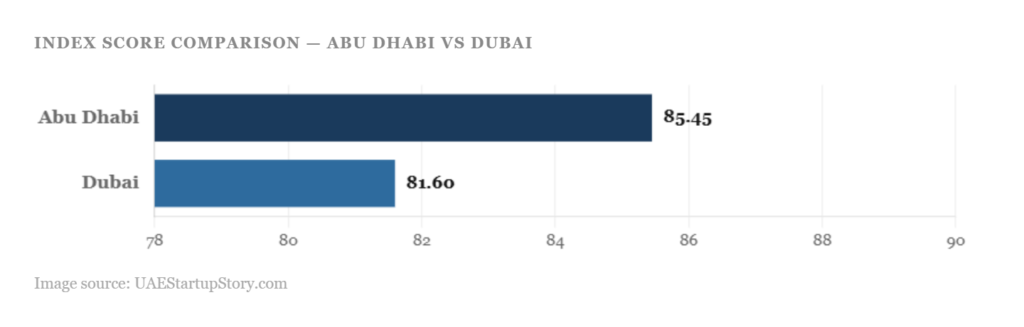
Abu Dhabi ranked first globally with a score of 85.45, making it the most startup-friendly city in 2026.
The report highlights that the emirate combines strong infrastructure with a highly supportive business environment. Its leadership position reflects a balance of low taxes, advanced connectivity, and growing investment in innovation-led sectors.
What role does internet connectivity play in Abu Dhabi’s ranking?
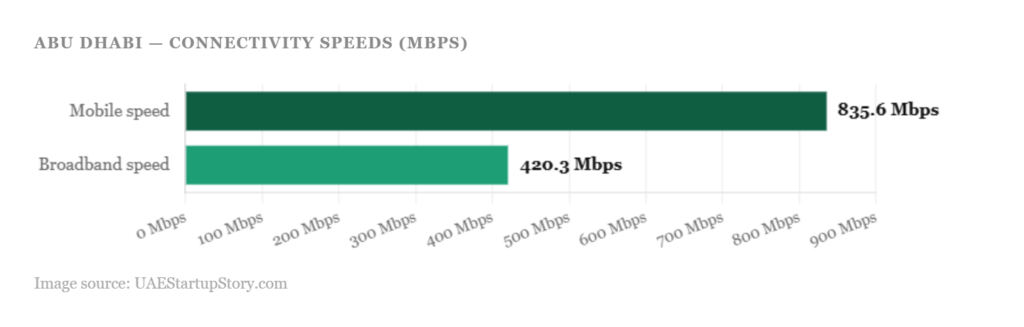
Abu Dhabi recorded the fastest connectivity speeds in the study, with median mobile speeds of 835.6 Mbps and broadband speeds of 420.3 Mbps.
This level of digital infrastructure supports remote work, global teams, and cloud-based operations. It also makes the city highly attractive for digital-first startups that depend on speed and reliability.
How does the UAE’s tax structure support startups?
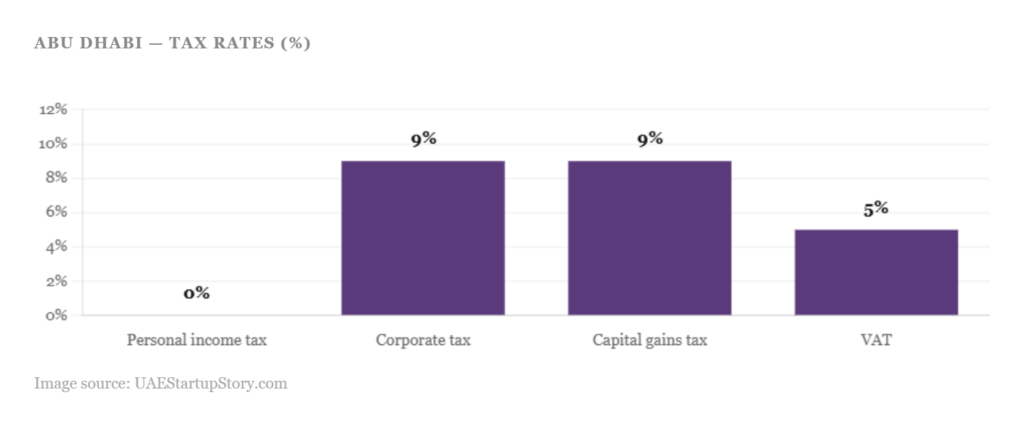
The report points to Abu Dhabi’s tax system as a major advantage. Founders benefit from 0% personal income tax, along with 9% corporate tax and 9% capital gains tax, supported by a low VAT rate.
This reduces financial pressure on startups and allows them to retain more capital for scaling operations and hiring.
Why is Dubai ranked as the second-best city globally?
Dubai secured second place with a score of 81.60, reflecting its strong economic momentum and founder-friendly environment.
The city continues to attract startups due to its business policies, global connectivity, and access to international markets. It also benefits from a mature ecosystem that supports both early-stage and scaling companies.
How is Dubai’s economic strategy driving startup growth?
The report highlights Dubai’s D33 Economic Agenda, which aims to double the size of its economy by 2033.
This long-term plan has accelerated startup activity, SME growth, and foreign investment. It also signals policy stability, which is critical for founders making long-term decisions.
What do income levels and quality of life indicate about Dubai?
Dubai stands out for its strong earning potential and lifestyle benefits. The report notes an average monthly income of £3,024 after tax, along with one of the highest quality of life scores in the index.
These factors make it easier for startups to attract skilled talent and build stable teams.
What does population growth reveal about founder interest?
The report highlights that over 200,000 new residents have moved to Dubai, reflecting growing global interest in the city.
This inflow includes founders, professionals, and investors, strengthening the overall startup ecosystem and increasing access to talent and capital.
What makes the UAE a leading global startup hub?
A combination of policy design, infrastructure investment, and founder-friendly economics drives the UAE’s strong performance in the rankings.
Abu Dhabi stands out for its advanced digital infrastructure. The city recorded median mobile speeds of 835.6 Mbps and broadband speeds above 420 Mbps, among the highest globally.
This level of connectivity supports remote-first companies, digital businesses, and globally distributed teams. It also reduces operational friction for startups that rely on real-time collaboration and cloud-based systems.
Tax efficiency is another major factor. With zero personal income tax and relatively low corporate and capital gains taxes, founders can retain more earnings and reinvest into growth. This creates a strong financial advantage, especially for early-stage companies managing limited capital.
In parallel, Abu Dhabi has increased investment in sectors such as artificial intelligence and emerging technologies, positioning itself as a hub for innovation-driven startups.
How is Dubai continuing to attract global founders and investors?
Dubai’s second-place ranking highlights its continued strength as a global business and startup hub.
The city’s growth is closely tied to its long-term economic strategy. The D33 Economic Agenda aims to double Dubai’s economy by 2033, with a strong focus on entrepreneurship, SME growth, and foreign investment.
This strategy is already influencing market activity. Dubai has seen a significant rise in startup formation and capital inflows, supported by policies that simplify business setup and attract international founders.
Population growth further reflects this momentum. More than 200,000 new residents have moved to Dubai, many relocating to benefit from its business-friendly environment, safety, and income potential.
Combined with high average income levels and a strong quality of life, Dubai continues to position itself as a base for founders building regional and global companies.
Why is the Middle East outperforming traditional startup markets?
The dominance of Abu Dhabi, Dubai, and Doha in the top three positions marks a clear shift in the global startup landscape.
The Middle East is no longer seen as an emerging ecosystem. Instead, it is becoming a primary destination for entrepreneurs, supported by deliberate policy decisions and infrastructure investments.
Doha’s third-place ranking reflects similar efforts. The introduction of long-term residency programs for entrepreneurs and executives, along with low tax rates, shows a long-term commitment to attracting global talent.
Across the region, governments are actively building competitive environments that combine regulatory ease, financial incentives, and modern infrastructure. This coordinated approach is helping the Middle East compete directly with established markets.
How are US startup ecosystems performing in comparison?
The United States continues to offer one of the deepest startup ecosystems globally, with multiple cities performing strongly in the rankings.
Atlanta emerged as the top US city, followed by Miami and Denver. These cities demonstrate strong business activity, high levels of private wealth, and consistent startup formation rates.
For example, high concentrations of millionaires and active business registrations indicate mature networks of investors, founders, and operators. This creates an environment where startups can access both capital and experience.
However, cost pressures remain a challenge. Cities like Miami show strong entrepreneurial energy but face higher living costs, which impact hiring, operational expenses, and overall affordability for startups.
This creates a gap where newer global hubs, particularly in the Middle East, offer similar opportunities with lower cost structures.
Why are Eastern European cities gaining attention from founders?
The report highlights a growing shift toward Eastern European cities such as Bucharest, Budapest, and Warsaw.
These cities are gaining traction because they offer a combination of lower living costs, competitive tax systems, and improving digital infrastructure.
For early-stage founders, this means lower burn rates and longer operational runway. It also allows startups to allocate more capital toward product development and market expansion rather than overhead costs.
This shift suggests that founders are becoming more strategic in location decisions, prioritizing efficiency over traditional brand value associated with older European hubs.
What does this mean for founders planning to build in the UAE or expand into the region?
The latest rankings confirm that the UAE is no longer an alternative market. It is becoming a primary base for building and scaling startups.
For founders already in the UAE, this strengthens the case to build locally. The combination of low taxes, strong infrastructure, and policy support allows startups to operate with lower costs and faster execution. This is especially important for early-stage companies that need longer runway and quicker go-to-market cycles.
For international founders, the UAE now offers a clear entry point into a high-growth region. Cities like Abu Dhabi and Dubai provide access to capital, global talent, and strategic geographic positioning between Asia, Europe, and Africa. The presence of long-term residency options and business-friendly regulations further reduces the barriers to relocation.
The data also shows that founders are no longer tied to traditional startup hubs. With remote work and digital infrastructure in place, location decisions are now strategic. Choosing a city like Abu Dhabi or Dubai can directly improve cost efficiency, hiring, and scalability from day one.
In practical terms, this means:
- Founders can reduce operational costs compared to Western markets
- Teams can build and scale faster with fewer regulatory delays
- Businesses can access international markets from a central global location
As global startup activity becomes more distributed, the UAE is positioning itself as a default choice for founders who want both growth and efficiency.