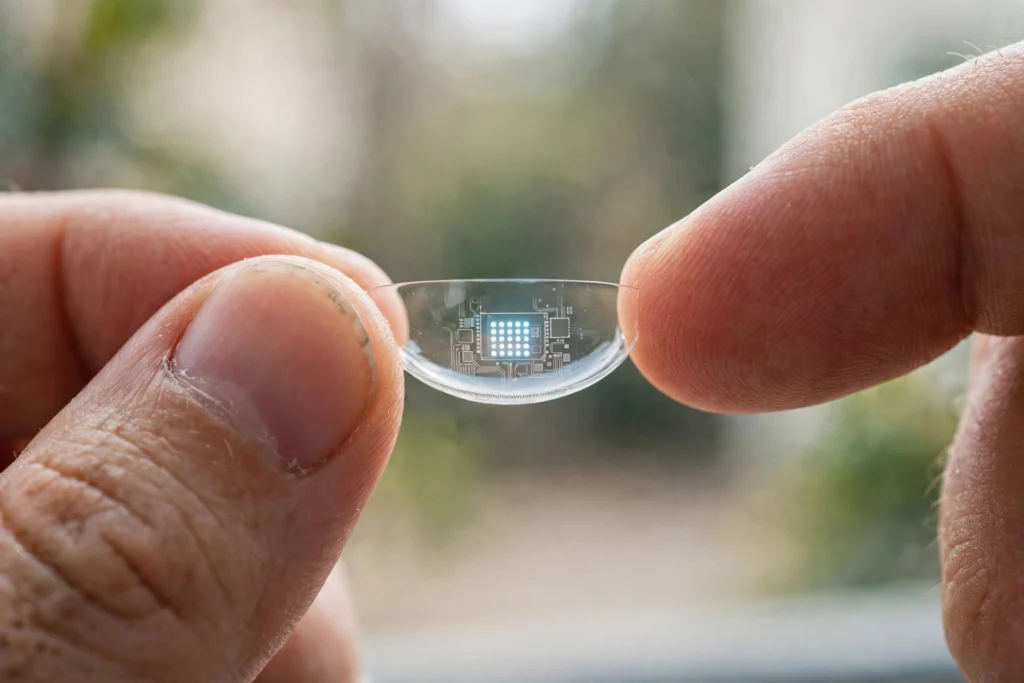
Imagine walking through Dubai Mall and seeing directions appear in front of your eyes, with no phone in your hand and no glasses on your face. That is the idea behind a Dubai startup called XPANCEO, which is building a smart contact lens that aims to put a small computer directly on your eye.
The lens is meant to be invisible and weightless. It would show information only you can see, and it would also try to read signals from your tears.
The company is not selling a finished product yet, and that matters. What it has shown so far is a set of prototypes, each testing one part of the idea.
A lens instead of a phone
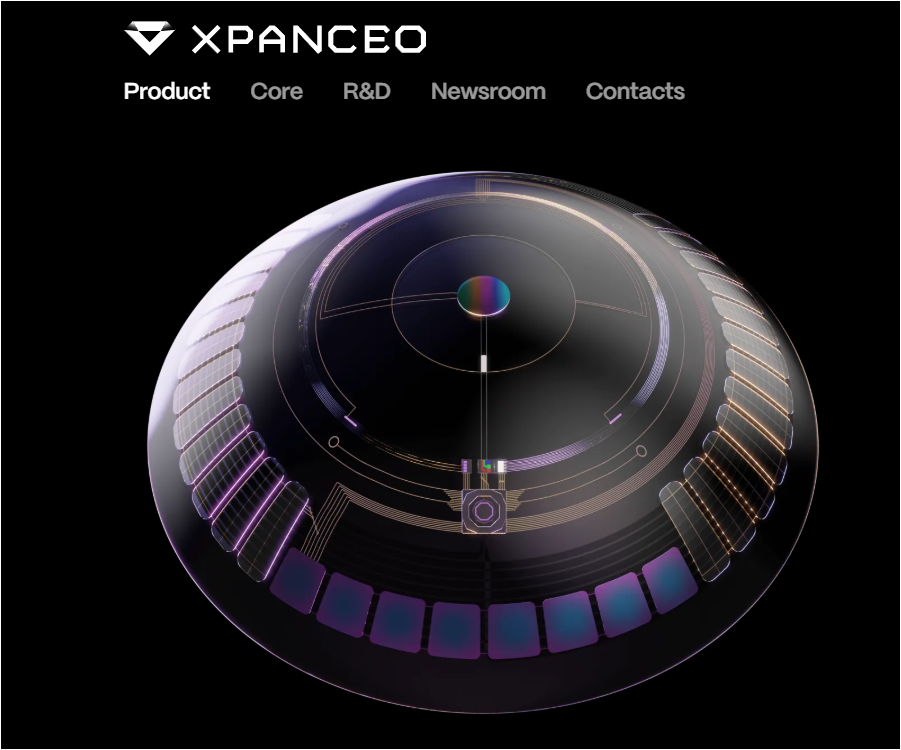
Most new gadgets add another screen to your life. XPANCEO wants to remove screens altogether.
The plan is to replace phones, glasses and watches with one lens that can show a digital layer over the real world. You could see a message, a map or a reminder without looking down at a device.
What it aims to do in daily life
In daily life, the most simple use is also the most easy to picture. You could walk to a meeting and see the route in your sight. You could get a message without taking your phone out of your pocket.
At work, a technician could see repair steps while keeping both hands free. For a driver, a pilot or an athlete, the same idea could show speed, timing or alerts without a screen in the way.
The health idea needs more proof
Health is the part that gets the most attention, and it is also the part that needs the most care. XPANCEO says the lens aims to track sugar levels from tears for people with diabetes, and to track eye pressure for people at risk of glaucoma.
The idea is simple. Tears carry clues about the body, and a lens sits in tears all day. A sensor in the lens could read those clues and send the result to a phone.
The company has shown prototypes that detect glucose in tears, and a separate prototype that aims to estimate eye pressure from a pattern on the lens. Those tests are early. There is no published human trial data from the company, and no approval from a regulator such as the FDA.
Medical trials are planned after the first full prototype is shown. Until then, no one should treat this lens as a medical device, or as a replacement for a finger prick test or a visit to an eye doctor.
Who is behind it
XPANCEO was founded by Roman Axelrod, an entrepreneur, and Valentyn Volkov, a physicist who works on light and tiny materials. The company is based in Dubai, with its office and showroom in Emmay Tower in Dubai Internet City. Its team is around 100 people, and it works with partners on displays, batteries and lens materials, including a space centre in Dubai that is testing a version for astronauts.
Investors have backed the idea with serious money. The company raised 40 million dollars in a seed round in 2023, and 250 million dollars in a Series A round in July 2025, at a valuation of 1.35 billion dollars.
That made it a unicorn, a startup valued at more than one billion dollars. The money is meant to finish the first full prototype, grow the research team, and prepare for regulatory tests and pilot projects.
When could you wear one
The next big date is early 2027. The company plans to show its first fully integrated prototype then, at Mobile World Congress in Barcelona from 1 to 4 March 2027. That lens would combine a display, health sensors and wireless power in one device for the first time.
After that, the company plans to start medical trials. Business and medical use could come first, possibly from 2028. For most people, the target is around 2030, and even that depends on the trials, the regulators and the manufacturing.
What this means for Dubai, even before launch
Dubai has built its name on trying the future early, from driverless transport to robot showrooms and now, possibly, a computer on your eye. XPANCEO fits that story, because it is based here, it is hiring researchers here, and it is testing its work with local partners, including in space. Even if the lens takes years to reach shops, the research, the jobs and the attention it brings are already part of the city.
For readers, the lesson is simple. Be excited, but be careful. A smart contact lens could change how we see information and how we track health.
It could also fail, or take much longer than planned. The best way to follow it is to watch what the company shows in 2027, not what it promises today.
If it works, Dubai will have helped build the next screen. If it does not, we will still have learned how far this idea can go.