
Flying cars are moving another step closer to real-world use in the UAE.
Ras Al Khaimah has signed a cooperation agreement with Chinese advanced air mobility company Aridge to test flying vehicles in the emirate. The project will also explore a future demonstration route between Abu Dhabi and Ras Al Khaimah.
The agreement brings together Aridge, the Ras Al Khaimah Transport Authority and the Ras Al Khaimah Department of Civil Aviation. Aridge will station aircraft and a specialist team in Ras Al Khaimah as part of the programme.
The deal is focused on testing first. Before flying cars can become part of everyday transport, the company and regulators need to understand how the aircraft perform in local conditions and how they can operate safely alongside existing air traffic.
Ras Al Khaimah will become a flying car test zone
Ras Al Khaimah will establish an advanced air mobility test zone where Aridge can carry out controlled flight tests.
The company will test its aircraft in representative desert conditions and study how they perform across different operating situations. The testing will cover flight performance, flight planning, airspace coordination and safety procedures.
The test zone will also give UAE aviation authorities a controlled environment to work on the rules needed for flying vehicles. This includes determining how they can use airspace, how flights should be managed and what safety standards operators must meet.
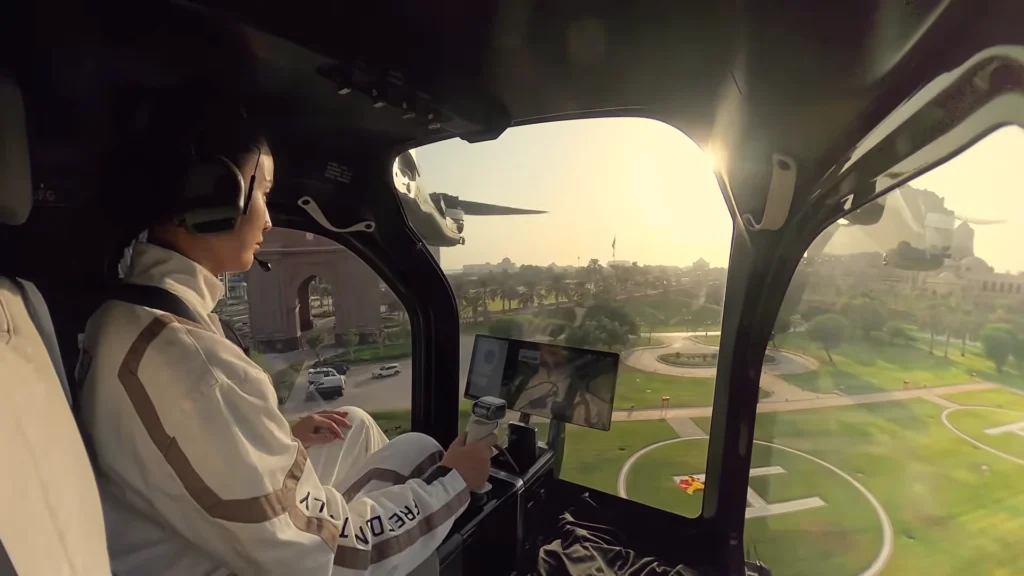
Aridge will work with the relevant authorities throughout the process. The aim is to move gradually from basic testing to more advanced validation and, eventually, operational trials.
This builds on previous work in the emirate. A flying vehicle completed a test flight in Ras Al Khaimah in 2025.
A flying car route between Abu Dhabi and Ras Al Khaimah
The project becomes even more interesting with plans for a demonstration route between Abu Dhabi and Ras Al Khaimah.
The two emirates are currently around 90 minutes apart by road. A flying route would provide a very different way to connect them, but the demonstration will need to test much more than the aircraft itself.
The project will look at how flights are planned, how aircraft coordinate with air traffic, how passengers move between the aircraft and ground facilities, and how safety procedures work throughout the journey.
This means the demonstration is also a test of the infrastructure and systems needed to make flying cars part of a wider transport network.
It is important to note that this is not yet a passenger service. The proposed Abu Dhabi to Ras Al Khaimah route is a demonstration project, and any future passenger operations will require regulatory approval.
From flying car demonstrations to real world testing
The latest agreement follows a flying vehicle demonstration by Aridge in Abu Dhabi and earlier testing in Ras Al Khaimah.
Aridge will now have aircraft and a specialist team based in the emirate, giving the company a local base to continue testing and working with regulators.
The partnership could eventually support other uses for advanced air mobility, including tourism, logistics, transport and emergency response. These applications will depend on regulatory approval and whether the technology is ready for operational use.
For now, the focus is on proving that flying cars can work safely in real conditions and building the rules and systems around them.
If the testing progresses as planned, Ras Al Khaimah could become an important testing ground for how flying cars may operate in the UAE and beyond.