How did PureHealth grow from a regional healthcare company into the UAE’s largest healthcare group while expanding across five countries?
Instead of relying on organic growth, the company built an integrated healthcare ecosystem through strategic acquisitions and technology investments.
In 2026, it operates more than 110 hospitals and serves 3.4 million insured members. In this guide, we break down PureHealth’s business model, growth strategy, acquisitions, financial performance, and the key decisions behind its success.
TL;DR – PureHealth Case Study
- PureHealth became the UAE’s largest healthcare group by combining hospitals, insurance, diagnostics, pharmacies, and healthcare technology into one integrated platform.
- The company grew quickly through strategic acquisitions, expanding into the UK, the US, Greece, and Cyprus instead of building new healthcare networks from scratch.
- Its Care and Cover business model creates multiple revenue streams from hospital services, insurance, laboratories, pharmacies, procurement, and technology.
- PureHealth continues to strengthen its competitive advantage by investing in AI, cloud infrastructure, digital health platforms, and data-driven healthcare.
- In Q1 2026, the company reported AED 7.3 billion in revenue, AED 57.3 billion in total assets, more than 110 hospitals, and 3.4 million insured members.
- PureHealth’s success shows how vertical integration, disciplined acquisitions, and technology investments can build a scalable global healthcare business.
PureHealth Highlights
| Attribute | Details |
| Company Name | PureHealth Holding PJSC |
| Headquarters | Abu Dhabi, United Arab Emirates |
| Sector/Industry | Healthcare and Health Insurance |
| Founders | Farhan Malik |
| Year Founded | 2006 |
| Number of Customers | 3.4 million health insurance members through Daman and 2.9 million patient interactions in Q1 2026. |
| Official Website | https://www.purehealth.ae |
What is PureHealth and What Does the Startup Do?
PureHealth is an integrated healthcare company that combines healthcare services and health insurance under one organization. The group operates through two business verticals: Care, which includes hospitals, clinics, laboratories, pharmacies, procurement, and healthcare technology, and Cover, which provides health insurance through Daman.
Instead of operating a single healthcare business, PureHealth manages multiple parts of the healthcare value chain, allowing it to deliver end-to-end healthcare services across five countries.
Founding Story and Current Status
PureHealth’s journey began in 2006, when Abu Dhabi started building a modern healthcare ecosystem through organizations such as Daman and SEHA. Over the following years, these organizations expanded independently while strengthening the emirate’s healthcare infrastructure.
In 2021, Abu Dhabi brought these healthcare assets together under PureHealth Holding PJSC, creating a single platform that integrated healthcare delivery, insurance, diagnostics, procurement, and technology. This structure gave PureHealth immediate scale and enabled it to pursue international expansion through acquisitions rather than building new operations from scratch.
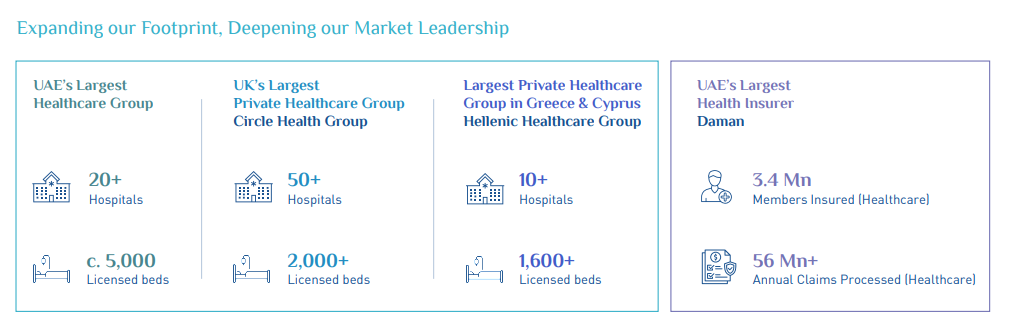
Today, PureHealth operates across the UAE, the UK, the US, Greece, and Cyprus. Its global network includes more than 110 hospitals, 316 clinics, 145 laboratories, over 61,000 employees, and more than 3 million insured members through Daman.
What Problem Does PureHealth Solve?
PureHealth addresses fragmented healthcare by connecting hospitals, insurance, diagnostics, pharmacies, and healthcare technology into one integrated platform. This approach improves care coordination, simplifies the patient experience, reduces operational inefficiencies, and enables continuous healthcare support through a single ecosystem.
Evolution of the Product and Services
PureHealth evolved from a UAE healthcare platform into a global healthcare group through strategic acquisitions and technology investments. Its portfolio now includes hospitals, insurance, diagnostics, pharmacies, AI, cloud technology, and international healthcare networks across the UAE, UK, US, Greece, and Cyprus.
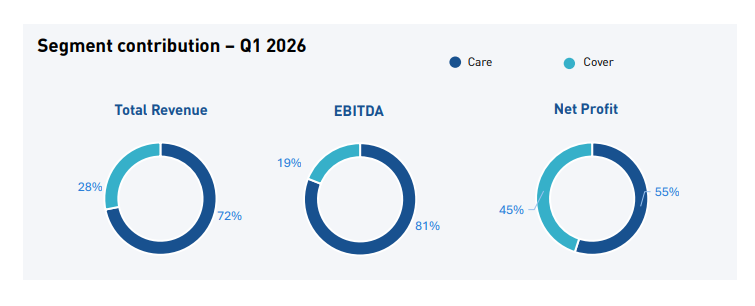
PureHealth generates revenue through two core business verticals: Care and Cover. While Care contributes most of the company’s revenue and EBITDA, Cover remains an important source of recurring insurance income. The chart below shows the contribution of each business segment during Q1 2026.
What is the Size of the Healthcare and Health Insurance Market in the UAE?
Size of the Healthcare and Health Insurance Market
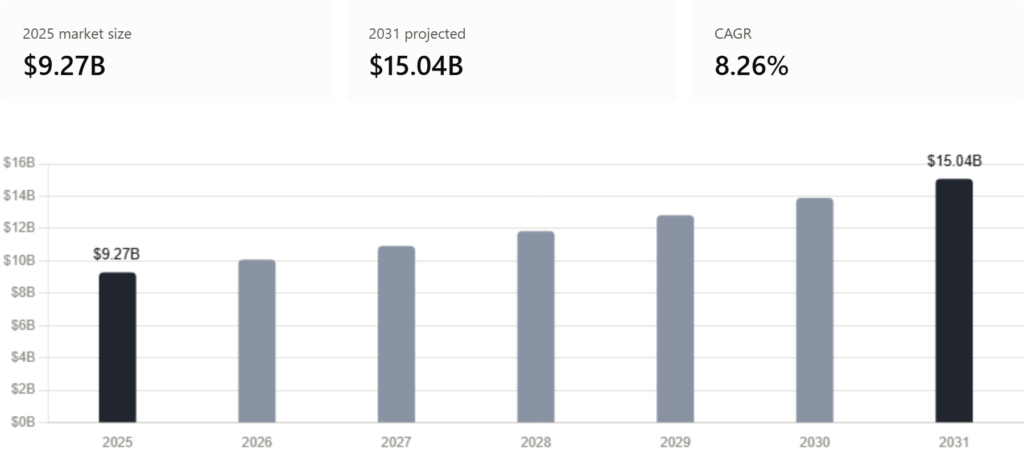
The UAE healthcare and health insurance market continues to expand as population growth, mandatory insurance policies, and healthcare investments increase demand. The UAE health and medical insurance market was valued at USD 9.27 billion in 2025 and is projected to reach USD 15.04 billion by 2031, growing at a CAGR of 8.26%.
Employer-sponsored insurance remains the largest segment, accounting for 72.69% of the market in 2025, while private insurers control more than 92% of industry premiums.
Growth Trends
Government regulations and digital transformation are reshaping the UAE’s healthcare and insurance landscape. Mandatory health insurance across all emirates, a growing expatriate workforce, rising medical costs, and increasing adoption of AI-driven claims processing are driving market growth.
The industry is also shifting toward integrated healthcare platforms that combine hospitals, insurance, diagnostics, and digital health services to improve patient outcomes and operational efficiency.
PureHealth’s Positioning and Target Audience
PureHealth is one of the few companies that combine healthcare delivery and health insurance on a single platform. Through its Care and Cover business model, PureHealth serves government organizations, employers, individual policyholders, and patients seeking primary, specialty, and tertiary healthcare services.
Its target audience extends beyond the UAE through hospitals and healthcare networks in the UK, the US, Greece, and Cyprus, allowing the group to diversify revenue while serving both local and international healthcare markets.
Who Are the Founders and Core Team Members of PureHealth?
Shaista Asif
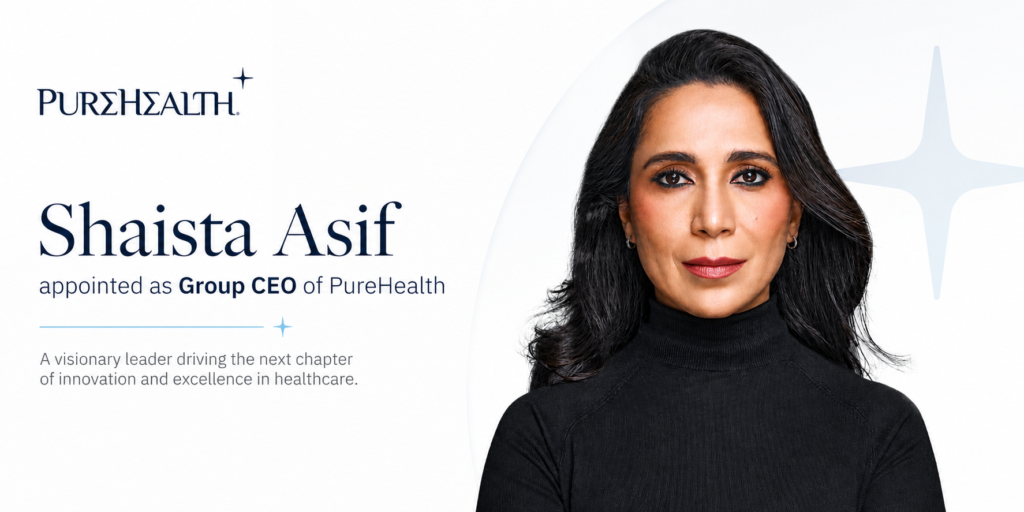
Shaista Asif co-founded PureHealth in 2006 with the vision of transforming healthcare through technology and integrated care. Before entering the healthcare industry, she built her career in consulting and enterprise technology, where she gained experience in digital transformation and large-scale business operations.
She helped grow PureHealth from a healthcare solutions business into an integrated healthcare platform that combines hospitals, insurance, diagnostics, and technology. She has also led the company’s international expansion through acquisitions in the UAE, the UK, the US, Greece, and Cyprus while driving investments in AI and digital healthcare. She became Group Chief Executive Officer in 2023 ahead of PureHealth’s public listing.
How Did PureHealth Start?: Background Story
Identifying a Bigger Opportunity
PureHealth entered the healthcare sector by working closely with healthcare providers instead of competing with them. This experience gave the business a clear understanding of how disconnected hospitals, insurers, laboratories, and suppliers affected both patient care and operational efficiency.
PureHealth recognized that improving one service would not solve these challenges because the entire healthcare ecosystem needed to work together.
Rethinking the Traditional Healthcare Model
PureHealth challenged the conventional healthcare model, where hospitals, insurers, and diagnostic providers operated independently. Instead of building another standalone healthcare business, PureHealth focused on creating an integrated platform where different healthcare services could support one another.
Building for Long-Term Scale
PureHealth focused on creating a scalable operating model before pursuing rapid expansion. The company invested in connecting healthcare services, insurance, diagnostics, technology, and supply chain capabilities into a unified platform.
How Does PureHealth Make Money?
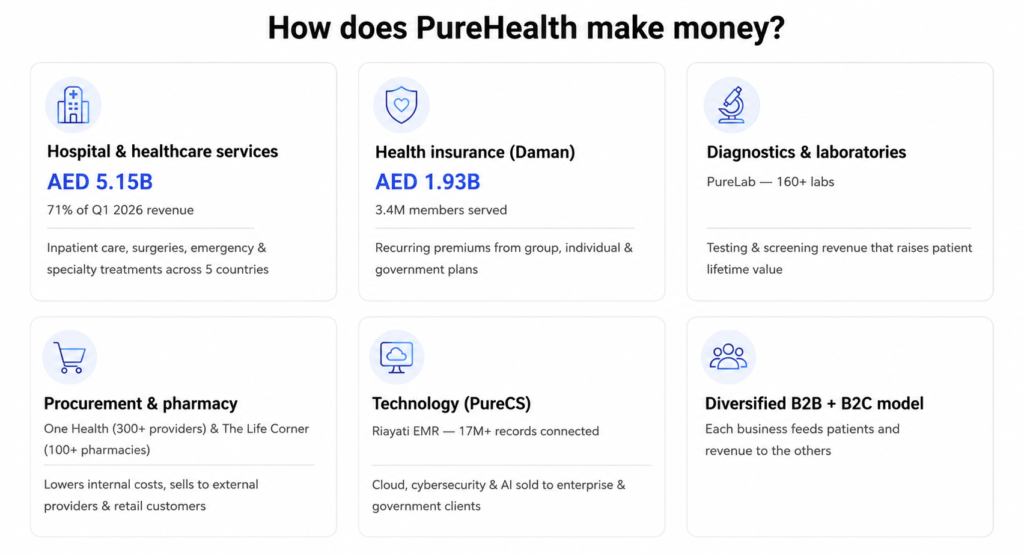
PureHealth follows an integrated B2B and B2C healthcare business model. Instead of relying on a single source of income, the company generates revenue from healthcare services, health insurance, diagnostics, medical procurement, and technology. This diversified model allows one business to support another.
For example, insurance members can access PureHealth’s hospitals and clinics, while diagnostics, pharmacies, and laboratories generate additional revenue throughout the patient’s healthcare journey.
Hospital and Healthcare Services Drive the Largest Share of Revenue
Hospital and healthcare services are PureHealth’s biggest revenue source. The group operates hospitals, specialty medical centers, clinics, and rehabilitation facilities across the UAE, the UK, the US, Greece, and Cyprus.
These businesses earn revenue from inpatient care, outpatient consultations, surgeries, emergency services, maternity care, and specialized treatments. In Q1 2026, this segment generated AED 5.15 billion, accounting for nearly 71% of the group’s total revenue.
Health Insurance Creates Recurring Revenue
Health insurance provides PureHealth with predictable and recurring income through its insurance business, Daman. Revenue comes from employer-sponsored group plans, individual health insurance, government-backed health programs, travel insurance, and other insurance products.
Daman also processes millions of claims annually, giving PureHealth continuous engagement with members throughout their healthcare journey. In Q1 2026, the insurance segment generated AED 1.93 billion in revenue and served 3.4 million members.
Diagnostics and Laboratories Increase Patient Lifetime Value
PureHealth generates additional revenue through diagnostic testing and laboratory services rather than relying solely on hospital visits. PureLab operates the UAE’s largest laboratory network with more than 160 laboratories, serving hospitals, clinics, and external healthcare providers.
Every laboratory test, screening service, and diagnostic procedure creates another revenue opportunity while supporting hospitals and insurance operations within the group’s ecosystem.
Medical Procurement and Pharmacies Strengthen the Ecosystem
PureHealth also earns revenue from medical procurement and pharmaceutical distribution. One Health supplies medical devices and healthcare products to more than 300 healthcare providers, while The Life Corner manages a network of over 100 pharmacies across the UAE.
These businesses reduce procurement costs for PureHealth’s hospitals while generating additional revenue from external healthcare organizations and retail pharmacy customers.
Technology Services Open New Revenue Opportunities
Unlike many healthcare providers, PureHealth owns its technology capabilities through PureCS. The business offers cloud services, cybersecurity, AI information systems, IT consulting, and digital healthcare solutions.
PureCS also developed Riayati, the UAE’s national electronic medical records platform, which connects more than 17 million health records. Besides supporting PureHealth’s internal operations, these technology services create independent revenue opportunities from enterprise and government healthcare projects.
Funding and Investors of PureHealth
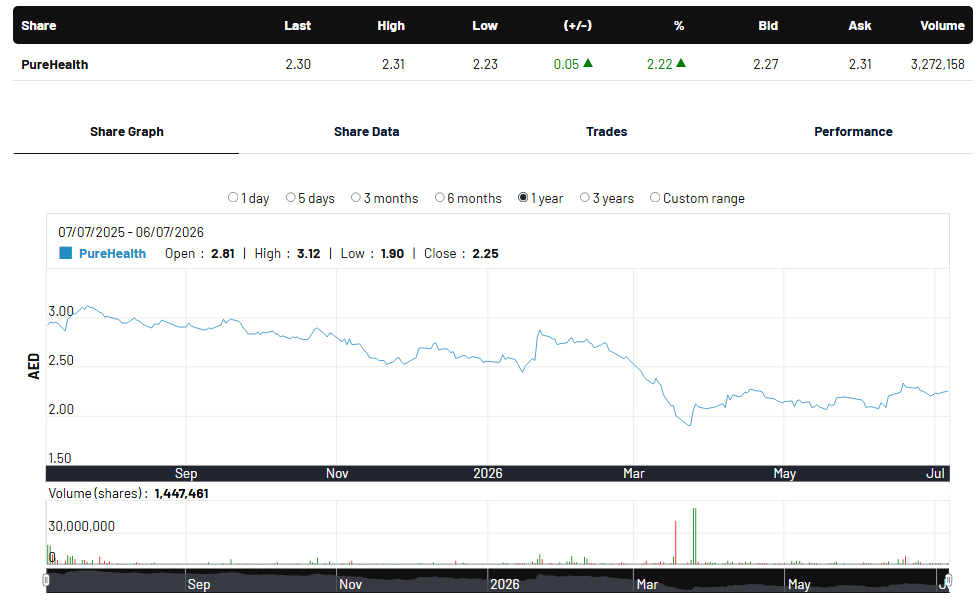
PureHealth is listed on the Abu Dhabi Securities Exchange (ADX). The company uses its public listing to provide investors with transparent financial information, share performance, and corporate disclosures.
Total Funding Raised
PureHealth has primarily funded its growth through strategic shareholders and public markets rather than multiple venture capital rounds. The company’s largest fundraising event was its initial public offering (IPO) in December 2023, which raised AED 3.62 billion (USD 986 million) by offering 1.11 billion shares, representing 10% of its issued share capital.
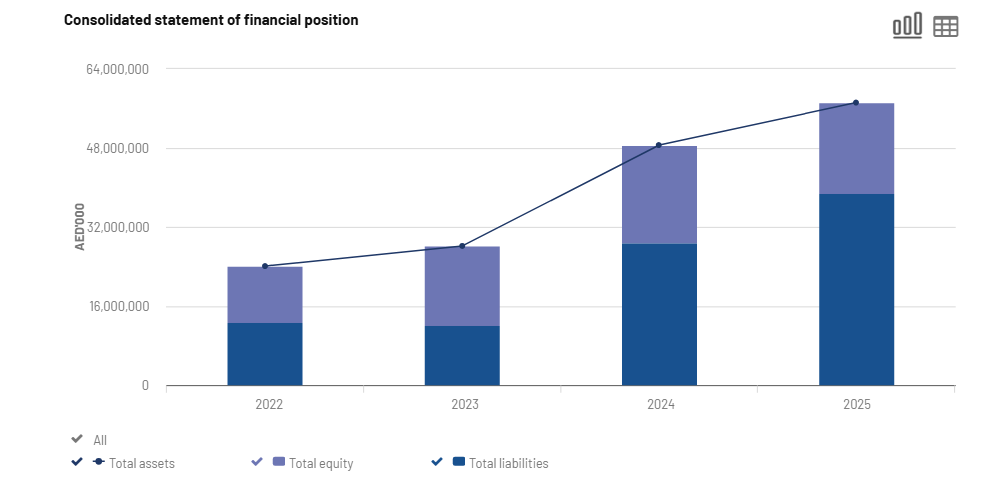
PureHealth entered the public market with a strong balance sheet. The company steadily increased its assets and equity before and after its IPO, providing the financial capacity to pursue large international acquisitions across the Middle East, Europe, the Americas, and Asia.
Major Funding Round
Unlike traditional startups that raise multiple seed, Series A, or Series B rounds, PureHealth scaled through strategic consolidation before entering the public market. Its December 2023 IPO attracted exceptional investor interest, generating more than AED 265 billion (USD 72 billion) in subscription demand. The retail tranche was oversubscribed 483 times, while institutional investors oversubscribed their allocation 54 times, making it one of the UAE’s largest and most successful IPOs.
Key Investors
PureHealth is backed by some of Abu Dhabi’s largest investment groups. Before the IPO, its principal shareholders included ADQ, Alpha Dhabi Holding, International Holding Company (IHC), AH Capital, and Al Ataa Financial Investment. These investors provided the financial strength and long-term capital required to pursue large international acquisitions and expand PureHealth into a global healthcare platform.
How Investors Accelerated Growth
PureHealth’s investors contributed more than capital. Their backing enabled the company to pursue billion-dollar acquisitions, including Circle Health Group in the UK, Ardent Health Services in the US, and Hellenic Healthcare Group in Greece and Cyprus. This financial support enabled PureHealth to enter mature healthcare markets rapidly, rather than relying solely on organic expansion, thereby significantly accelerating its international growth strategy.
What Are PureHealth’s Growth Metrics and Revenue Figures?
User and Customer Base
- Serves 3.4 million health insurance members through Daman, making it the UAE’s largest health insurer.
- Recorded 2.9 million patient interactions during Q1 2026 across its global healthcare network.
- Processes more than 52 million insurance claims annually across its insurance operations.
- Operates a healthcare network spanning 110+ hospitals, 316+ clinics, 145+ laboratories, and 200+ medical specialties across five countries.
- Employs more than 61,000 healthcare professionals and staff worldwide.
Revenue and Growth Numbers
- Generated AED 7.3 billion in revenue during Q1 2026, representing a 10% year-over-year increase.
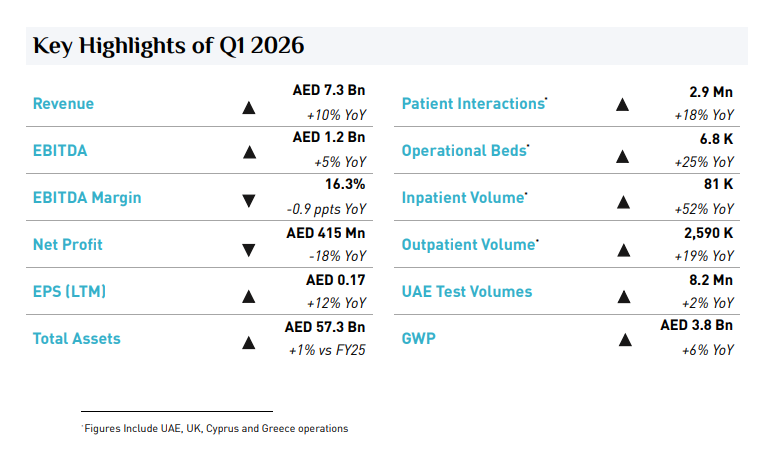
- Reported AED 1.4 billion EBITDA in Q1 2026, up 25% year over year.
- Increased total assets to AED 57.3 billion as of 31 March 2026.
- Generated AED 20.1 billion in revenue during the first nine months of 2025, reflecting 6% annual growth.
- Achieved AED 3.5 billion EBITDA during the first nine months of 2025, an 11% increase compared to the previous year.
- Reported AED 1.55 billion in net profit during the first nine months of 2025, representing 8% year-over-year growth.
Key Achievements, Awards, and Market Position
- Built the largest healthcare group in the UAE and the only vertically integrated Care and Cover platform in the MENA region.
- Expanded operations across five countries, including the UAE, UK, US, Greece, and Cyprus.
- Ranked Daman as the UAE’s leading health insurance provider with more than 3 million insured members.
- Received an A1 Insurance Financial Strength Rating from Moody’s for Daman in 2026, reflecting strong financial stability.
- Achieved an estimated brand valuation of AED 11 billion and was recognized as the Middle East’s Leading Healthcare Brand in the 2026 Brand Finance Report.
- Completed major international acquisitions, including Circle Health Group (UK), Ardent Health Services (US), and Hellenic Healthcare Group (Greece and Cyprus), establishing a diversified global healthcare platform.
Mergers, Acquisitions & Investments of PureHealth
PureHealth used acquisitions as its primary growth strategy instead of expanding organically. Rather than building hospitals, insurance businesses, or technology platforms from scratch, the company acquired established healthcare organizations that strengthened different parts of its ecosystem. Each acquisition added new capabilities, expanded its geographic reach, or diversified its revenue streams.
Daman Strengthened the Insurance Business
Daman became one of PureHealth’s most valuable assets by adding the UAE’s largest health insurance provider to the group. The acquisition gave PureHealth access to more than 3 million insured members and a recurring source of premium income. More importantly, it connected the company’s insurance business with its hospitals, clinics, and laboratories, creating an integrated Care and Cover model that improved patient experience while generating multiple revenue streams.
Ardent Health Services Opened the US Market
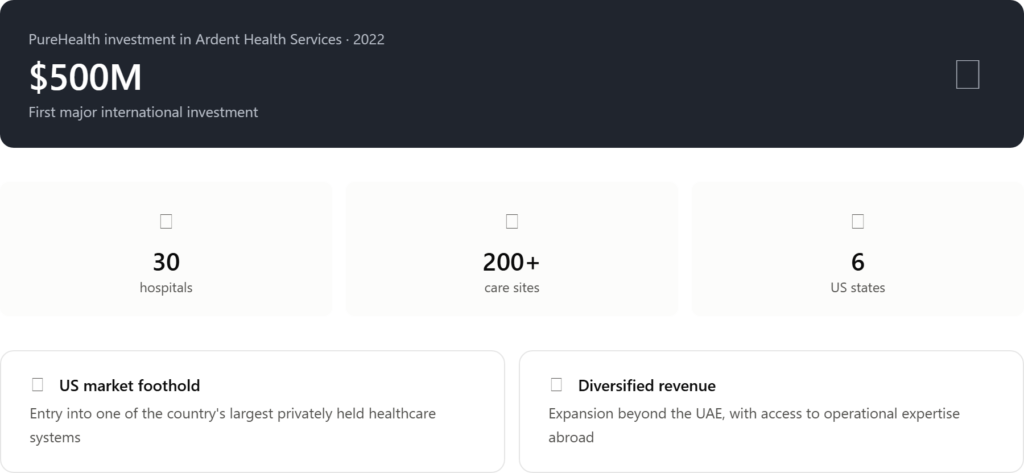
PureHealth invested USD 500 million in Ardent Health Services in 2022, marking its first major international investment. The deal gave PureHealth a foothold in the US healthcare market through one of the country’s largest privately held healthcare systems. Ardent operates 30 hospitals and more than 200 care sites across six states.
The investment diversified PureHealth’s revenue beyond the UAE while giving it access to operational expertise in one of the world’s largest healthcare markets.
Circle Health Group Accelerated Global Expansion
PureHealth acquired Circle Health Group, the UK’s largest private hospital operator, for USD 1.2 billion in 2024. Instead of entering the UK market by building hospitals over several years, PureHealth acquired an established network with existing infrastructure, patients, and clinical expertise. The acquisition expanded the group’s international footprint and reduced its dependence on the UAE market by adding a mature healthcare business with stable revenue.
Hellenic Healthcare Group Expanded Its European Presence
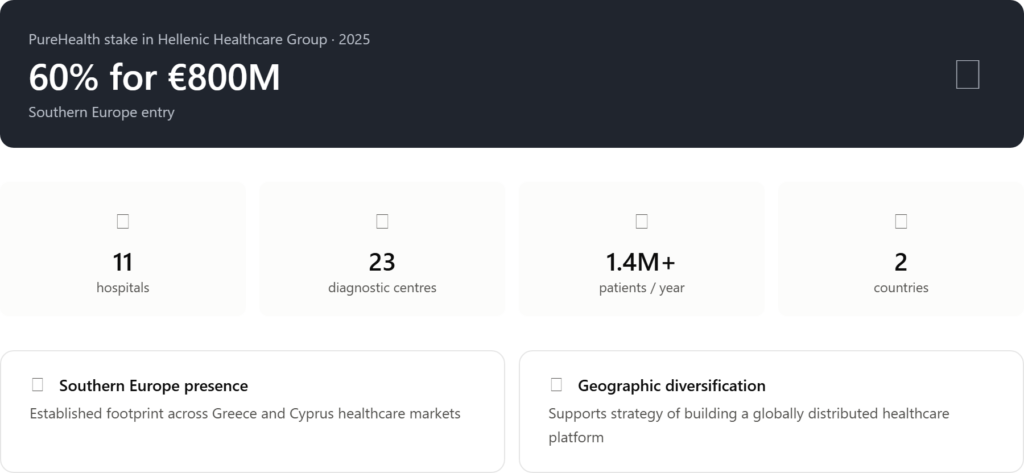
PureHealth acquired a 60% stake in Hellenic Healthcare Group (HHG) for EUR 800 million in 2025. The acquisition added 11 hospitals, 23 diagnostic centers, and healthcare services for more than 1.4 million patients annually across Greece and Cyprus. The deal strengthened PureHealth’s presence in Southern Europe while supporting its strategy of building a geographically diversified healthcare platform.
PureCS Added AI and Digital Healthcare Capabilities
PureHealth acquired PureCS to strengthen its healthcare technology business. PureCS specializes in cloud computing, cybersecurity, artificial intelligence, and digital healthcare solutions. The acquisition also brought the Riayati national electronic medical records platform into the group, connecting more than 17 million electronic health records across the UAE. This investment strengthened PureHealth’s ability to use AI and digital technologies to improve patient care and operational efficiency.
What Partnerships Has PureHealth Formed Recently?
Department of Health – Abu Dhabi and AstraZeneca
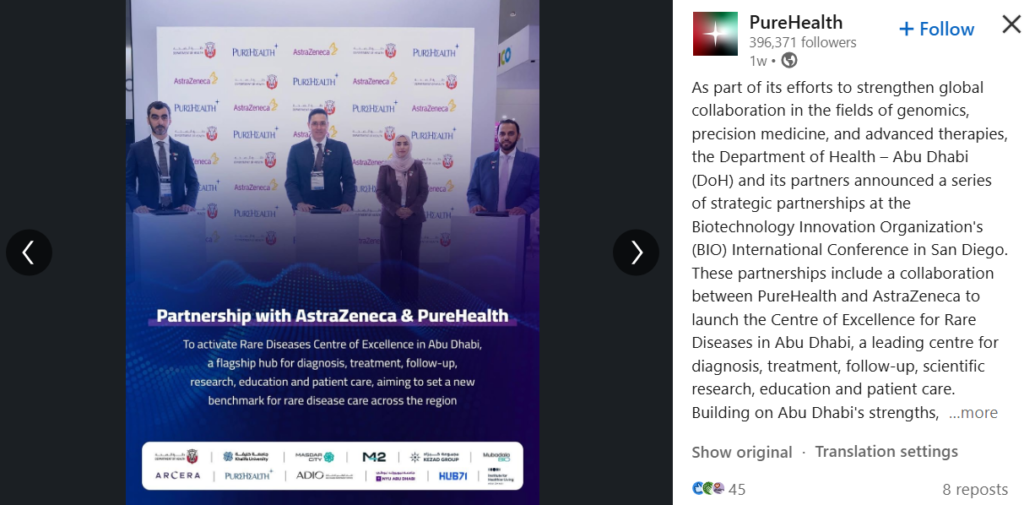
PureHealth partnered with the Department of Health – Abu Dhabi and AstraZeneca during the 2026 BIO International Convention to establish a Rare Diseases Center of Excellence in Abu Dhabi. The partnership combines genomics, precision medicine, research, and patient care to improve the diagnosis and treatment of rare diseases. It also strengthens Abu Dhabi’s position as a regional hub for advanced healthcare and life sciences.
Etihad Airways and the Department of Culture and Tourism – Abu Dhabi
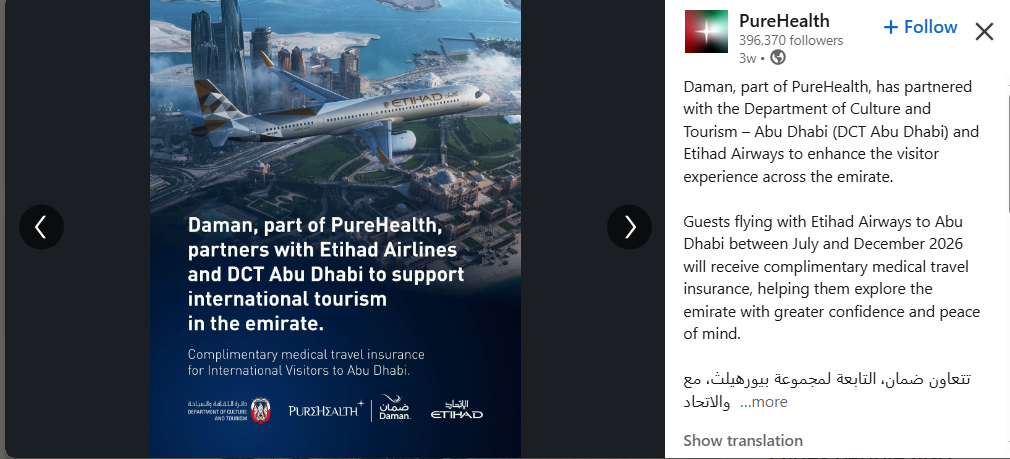
Through its insurance arm, Daman, PureHealth partnered with Etihad Airways and the Department of Culture and Tourism – Abu Dhabi to provide complimentary medical travel insurance for eligible visitors flying to Abu Dhabi. The collaboration improves visitor confidence while promoting Abu Dhabi as a healthcare and tourism destination. It also expands Daman’s insurance reach beyond traditional health coverage.
University of Nicosia
PureHealth expanded its healthcare education initiatives by launching a campus at the University of Nicosia in Athens. The partnership supports medical education, clinical research, and workforce development while strengthening PureHealth’s presence in Greece. It also helps the company build a long-term talent pipeline to support its growing international healthcare network.
Department of Health – Abu Dhabi
PureHealth continues to work closely with the Department of Health – Abu Dhabi on healthcare innovation initiatives. The partnership supports projects in genomics, AI, precision medicine, women’s health, advanced therapies, and longevity research. By collaborating with government institutions, PureHealth accelerates the adoption of emerging healthcare technologies while contributing to Abu Dhabi’s healthcare transformation strategy.
Mayo Clinic
PureHealth strengthened its relationship with Mayo Clinic by acquiring the latter’s stake in Sheikh Shakhbout Medical City while maintaining collaboration on clinical excellence, research, and knowledge exchange. The partnership helps PureHealth adopt global best practices and deliver specialized healthcare services across its hospital network.
What Are PureHealth’s Products and Service Offerings?
PureHealth has built an integrated healthcare ecosystem instead of relying on a single product. Its offerings span healthcare delivery, health insurance, diagnostics, pharmacies, medical supplies, and healthcare technology. This diversified portfolio allows the company to serve patients, employers, governments, and healthcare providers through multiple businesses that work together.
Hospitals and Specialty Healthcare Services
Hospitals form the foundation of PureHealth’s healthcare business. Through SEHA, Sheikh Shakhbout Medical City (SSMC), Circle Health Group, Ardent Health Services, Hellenic Healthcare Group, and The Medical Office, PureHealth operates more than 110 hospitals across the UAE, the UK, the US, Greece, and Cyprus.
These facilities provide primary care, emergency medicine, specialized surgeries, rehabilitation, maternity care, oncology, cardiovascular treatment, and other advanced medical services. This broad network enables PureHealth to serve millions of patients while expanding into international healthcare markets.
Health Insurance Solutions
Health insurance is PureHealth’s second major business through Daman, the UAE’s largest health insurer. Daman offers individual and family plans, employer-sponsored group insurance, government health programs, travel insurance, Golden Visa health insurance, retirement health plans, and employee benefits solutions.
Serving more than 3 million members, this business generates recurring premium income while directing policyholders to PureHealth’s hospitals, clinics, and healthcare providers, creating a connected Care and Cover ecosystem.
Diagnostics, Laboratories, and Pharmacy Services
PureHealth extends patient care beyond hospitals through diagnostics and pharmacy services. PureLab operates the UAE’s largest laboratory network with more than 160 laboratories, supporting hospitals, clinics, and external healthcare providers with diagnostic testing. The Life Corner complements these services through a network of more than 100 pharmacies that provide prescription medicines, pharmaceutical products, and medication management services. Together, these businesses allow PureHealth to support patients before, during, and after treatment.
Medical Supply Chain and Procurement Services
PureHealth supports healthcare providers through One Health, its medical devices, and its procurement business. One Health supplies medical equipment, diagnostic devices, consumables, and biomedical services to more than 300 healthcare providers across the UAE. This business strengthens PureHealth’s supply chain, reduces procurement costs for its hospitals, and generates additional revenue from external healthcare organizations.
Healthcare Technology and Digital Solutions
PureHealth has expanded beyond healthcare delivery by investing heavily in digital health infrastructure. Through PureCS, the company provides cloud computing, cybersecurity, AI information systems, enterprise IT solutions, and digital transformation services for healthcare organizations.
PureCS also developed Riayati, the UAE’s national electronic medical records platform that connects more than 17 million patient records. These capabilities help PureHealth improve operational efficiency while creating an additional revenue stream from technology.
Product Evolution and Digital Innovation
PureHealth has continuously expanded its offerings to keep pace with changing healthcare needs. The company introduced Pura, an AI-powered healthcare companion that helps users manage their health digitally, and PureNet, a healthcare cloud platform that enables Digital Health as a Service. It also uses AI to automate insurance claims, improve diagnostics, strengthen cybersecurity, and support clinical decision making. These innovations demonstrate PureHealth’s strategy of combining healthcare services with digital technology to improve patient outcomes and operational efficiency.
What Challenges Has PureHealth Faced?
Building an Integrated Healthcare Platform
PureHealth’s biggest challenge was integrating multiple healthcare businesses into one operating model. Hospitals, insurance, diagnostics, pharmacies, laboratories, procurement, and technology traditionally function as independent businesses. PureHealth had to connect these services into a unified Care and Cover platform while maintaining consistent clinical standards, operational efficiency, and patient experience across the ecosystem.
Scaling Through International Acquisitions
PureHealth expanded into the UK, the US, Greece, and Cyprus within a few years through billion-dollar acquisitions. Each acquisition introduced different healthcare systems, regulatory requirements, and operating models. Instead of standardizing everything immediately, PureHealth retained experienced local leadership while gradually integrating technology, governance, and operational best practices across its international businesses.
Balancing Rapid Growth with Financial Discipline
PureHealth invested billions of dollars in acquisitions while continuing to grow organically. The company had to maintain profitability, preserve a strong balance sheet, and generate returns from newly acquired businesses at the same time.
Financial reports show that PureHealth continued to increase revenue, EBITDA, and total assets while funding these acquisitions, demonstrating disciplined capital allocation rather than aggressive expansion.
Turning Technology Into a Competitive Advantage
PureHealth recognized that digital healthcare would become a major competitive differentiator, but building AI and cloud capabilities required significant investment. Instead of relying on third-party vendors, the company acquired PureCS and developed platforms such as Pura, PureNet, and AI-driven claims processing.
Who Are PureHealth’s Main Competitors, and How Do They Compare?
Burjeel Holdings
Burjeel Holdings is one of the UAE’s largest private healthcare providers, operating hospitals, medical centers, and specialty clinics across the Middle East. Unlike PureHealth, Burjeel primarily focuses on healthcare delivery and does not operate a large health insurance business.
PureHealth’s integrated Care and Cover model gives it greater control over both healthcare services and insurance.
Mediclinic Middle East
Mediclinic Middle East operates premium hospitals and clinics across the UAE. The company focuses on high-quality private healthcare and specialty services. PureHealth competes through a broader healthcare ecosystem that includes insurance, laboratories, pharmacies, procurement, and healthcare technology alongside hospital operations.
M42
M42 focuses on AI, genomics, digital health, and precision medicine. While both companies invest heavily in healthcare technology, M42 concentrates on health technology and research, whereas PureHealth combines technology with hospitals, insurance, diagnostics, and international healthcare operations.
NMC Healthcare
NMC Healthcare operates hospitals, fertility centers, and medical clinics across the UAE. It has a strong presence in private healthcare but does not operate the same level of vertically integrated insurance and healthcare services as PureHealth. PureHealth’s diversified business model creates additional revenue streams beyond hospital operations.
Bupa
Bupa is one of the world’s largest health insurance companies and competes with Daman. However, Bupa primarily generates revenue from insurance, while PureHealth combines insurance with hospitals, diagnostics, pharmacies, and technology. This integration enables PureHealth to participate in multiple stages of the patient journey.
What Gives PureHealth a Competitive Edge?
PureHealth’s biggest advantage is its integrated business model. Instead of operating only hospitals or only insurance, it combines healthcare delivery, insurance, diagnostics, pharmacies, medical procurement, and healthcare technology into one ecosystem. This structure creates recurring revenue, improves care coordination, supports international expansion, and reduces dependence on any single healthcare business.
| Company | Primary Focus | Global Presence | Health Insurance | Integrated Healthcare Platform |
| PureHealth | Healthcare and Health Insurance | UAE, UK, US, Greece, Cyprus | Yes | Yes |
| Burjeel Holdings | Hospitals and Clinics | Middle East | No | Partial |
| Mediclinic Middle East | Hospitals and Clinics | UAE | No | Partial |
| M42 | AI, Genomics, Digital Health | Global Partnerships | No | Partial |
| NMC Healthcare | Hospitals and Clinics | Middle East | No | Partial |
| Bupa | Health Insurance | Global | Yes | No |
What Are the Future Plans for PureHealth?
Increasing International Revenue
PureHealth plans to increase the contribution of its international businesses as part of its long-term growth strategy. The company has stated that it aims to generate around 50% of its revenue from international markets by 2029, building on its operations in the UK, the US, Greece, and Cyprus. This strategy reduces dependence on the UAE market while creating a more geographically diversified business.
Expanding Through Strategic Acquisitions
PureHealth has identified acquisitions as a key driver of future growth. Rather than building new healthcare networks from scratch, the company intends to continue acquiring established healthcare businesses that strengthen its hospital network, insurance capabilities, and international presence. Its acquisitions of Circle Health Group, Hellenic Healthcare Group, and Ardent Health Services reflect this long-term approach.
Growing the Care and Cover Platform
PureHealth plans to deepen the integration between its healthcare and insurance businesses. The company continues to expand its hospital network, specialty care services, and Daman’s insurance offerings while strengthening coordination across hospitals, clinics, diagnostics, and pharmacies. This strategy supports higher patient retention and creates additional revenue opportunities across the healthcare ecosystem.
Advancing AI and Digital Healthcare
PureHealth continues to invest in AI and digital healthcare through businesses such as PureCS. The company has already deployed AI for insurance claims processing, healthcare data management, and digital health services, and it plans to expand these capabilities across its global operations. Leadership has also identified AI as a core enabler of future healthcare innovation and operational efficiency.
FAQs
When did PureHealth start?
PureHealth’s journey began in 2006 as a healthcare solutions business. In 2021, Abu Dhabi consolidated several healthcare assets under PureHealth Holding PJSC, creating an integrated healthcare platform that combines hospitals, health insurance, diagnostics, pharmacies, and healthcare technology. Since then, PureHealth has expanded internationally through strategic acquisitions.
How does PureHealth make money?
PureHealth generates revenue from multiple healthcare businesses rather than relying on a single source of income. Its primary revenue streams include hospital and clinical services, health insurance premiums through Daman, diagnostic and laboratory testing, pharmacy services, medical procurement, and healthcare technology solutions. This diversified business model creates recurring revenue while reducing dependence on any one segment.
What is PureHealth?
PureHealth is the UAE’s largest healthcare group and the only vertically integrated Care and Cover platform in the MENA region. It operates hospitals, clinics, laboratories, pharmacies, health insurance, medical procurement, and healthcare technology businesses across the UAE, the UK, the US, Greece, and Cyprus. The company aims to deliver integrated healthcare services while improving patient outcomes through technology and innovation.
What is PureHealth’s net worth?
PureHealth reported AED 57.3 billion (approximately USD 15.6 billion) in total assets as of 31 March 2026, reflecting the scale of its healthcare operations and international acquisitions. Its market value varies with the share price of PureHealth Holding PJSC, which is listed on the Abu Dhabi Securities Exchange (ADX).
Who owns PureHealth?
PureHealth Holding PJSC is a publicly listed company on the Abu Dhabi Securities Exchange (ADX). Its major shareholders include ADQ, Alpha Dhabi Holding, International Holding Company (IHC), and other institutional investors that support the company’s long-term growth strategy.
How many countries does PureHealth operate in?
PureHealth operates across five countries through its healthcare and insurance businesses. Its network spans the UAE, the UK, the US, Greece, and Cyprus, with more than 110 hospitals, 316 clinics, 145 laboratories, and over 3 million insured members.
What companies are part of PureHealth?
PureHealth owns and operates a diversified portfolio of healthcare businesses, including Daman, SEHA, Sheikh Shakhbout Medical City (SSMC), Circle Health Group, Ardent Health Services, Hellenic Healthcare Group, PureLab, PureCS, One Health, The Life Corner, and The Medical Office. Together, these businesses enable PureHealth to provide integrated healthcare, insurance, diagnostics, technology, and pharmacy services.