Mulk International has switched on a robotic construction factory in Sharjah, run by software that turns architectural drawings into instructions for machines. The system is called UNIQUBE OS, and the company says it connects the whole building process, from design to installation.
The factory brings together three technologies: robotic manufacturing with light gauge steel, automated precast concrete production, and the AI powered software that ties them together. It can produce 30,000 square feet of building components a day.
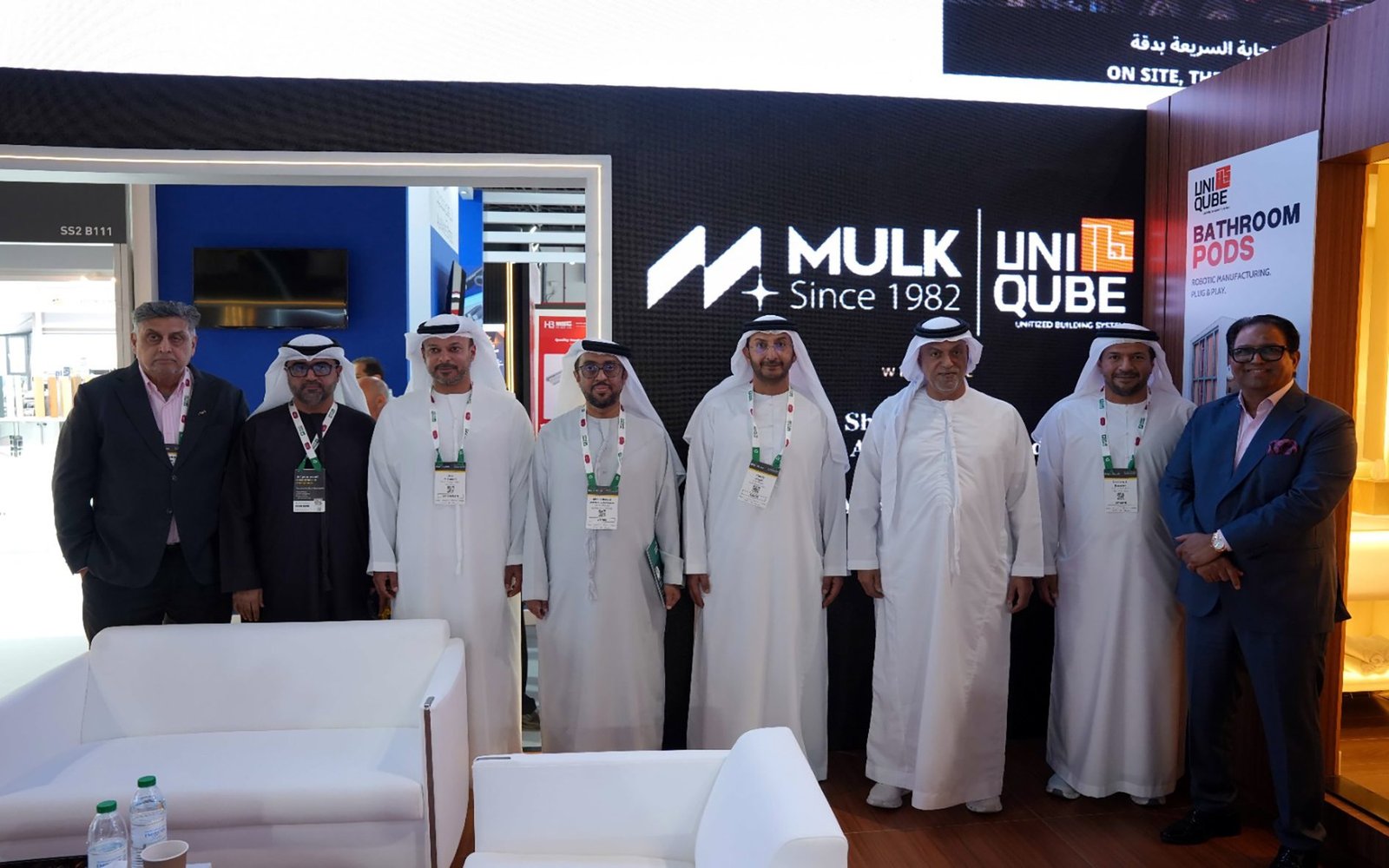
The announcement came on 26 November, as the company showed the technology at BIG 5 Dubai, the region’s big construction trade show. It is the latest step for UNIQUBE, the modular construction brand of a group founded in 1982.
Three technologies, one factory floor
The heart of the factory is robotic light gauge steel manufacturing, which cuts and shapes steel frames with precision engineering. Alongside it, automated precast concrete production makes concrete bases and modular components in the same coordinated system.
The factory can produce around 12,000 bathroom and kitchen pods a year, and up to ten modular homes a day, depending on the configuration. Every unit leaves the factory with mechanical, electrical and plumbing systems already integrated, ready to install with minimal labour on site.
The applications range from homes and commercial buildings to large industrial sheds, modular housing and prefabricated pods. Mulk says the approach cuts labour costs by 70 per cent and installs 50 per cent faster than traditional building methods.
What UNIQUBE OS actually does
UNIQUBE OS is the software layer that makes the factory work as one system. It starts with architectural drawings and building information models, then converts the design into machine ready instructions for the robotic lines.
From there it coordinates production scheduling, material requirements, component identification, quality control, logistics and installation. A digital tracking system links what happens in the factory to what happens on the building site, so nothing gets lost between the two.
The point is consistency. A robot does not get tired, and a digital instruction does not get misread the way a paper drawing can. For a sector where delays and rework are normal, that is the promise: faster delivery, less waste and fewer surprises.
From bathroom pods to AI data centres
UNIQUBE will also build AI ready modular data centres, from complete buildings to factory made modules. The units are designed for high density GPU server racks, liquid cooling, power distribution, back up power, fire protection and monitoring equipment.
The modules are factory tested before they leave, with mechanical, electrical and IT infrastructure already integrated. The company says they will support edge computing facilities and scalable multi megawatt AI data centres.
That is a notable second market. The same factory that builds homes can build the shells for the AI infrastructure the region is racing to deploy. It is a bet that construction and computing will increasingly share the same supply chain.
A 40-day factory that proved the point
UNIQUBE has already used its own system to build its factory. The cold formed steel structure of its new 36,000 square foot production facility, including roofing and mechanical, electrical and plumbing works, was completed in just 15 days. The entire factory, including foundations and civil works, took 40 days.
The venture was jointly conceived by Shaji Ul Mulk, chairman of Mulk International, and Arbab Khan, the group’s chief executive. It is being developed through MULK MARSES, a joint venture with Marses Robotics, under the leadership of Adnan Al Mulk, vice chairman of the group.
Mulk International is best known for ALUBOND USA, its metal composite panel brand, and for ventures from real estate to sports. UNIQUBE extends that manufacturing history into modular homes, with projects in its portfolio including the Wyndham Hotel in the USA, the ADNOC Training Center in the UAE and Zim Cyber City in Zimbabwe.
What factory built homes mean for UAE construction
Construction in the UAE has a labour problem and a speed problem, and this factory answers both at once. Robots do not need visas, and a home that arrives finished does not wait for a dozen trades to show up in sequence.
The honest question is whether the economics hold beyond the showcase. A factory that builds pods and data centre shells needs steady orders to justify its robots, and modular construction has promised more than it delivered in many markets before.
Still, the direction of travel is hard to argue with. The UAE has more than 896 billion dollars worth of active construction projects, and every one of them needs workers the country has to import. If UNIQUBE can build faster with fewer hands, it will not stay a novelty for long.