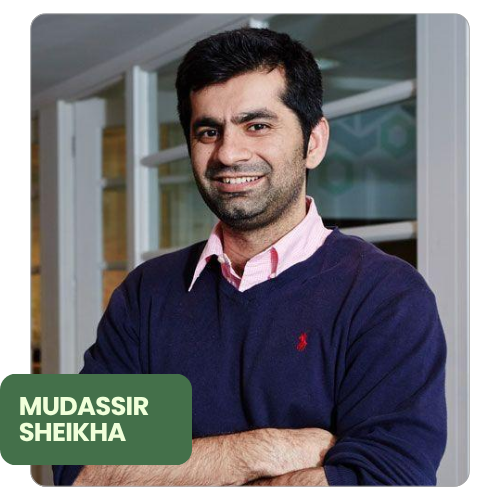
Mudassir Sheikha is the visionary co-founder and CEO of Careem, the first technology “unicorn” in the Middle East that was acquired by Uber for $3.1 billion in 2020.

Born in Karachi and educated at Stanford University, Sheikha left a prestigious career as an associate partner at McKinsey & Co. to address the region’s fragmented transportation system.
His journey is marked by a deep commitment to regional impact, famously choosing to stay on as CEO post-acquisition to ensure the brand continued serving local needs.
1. Solve a Substantial Regional Problem
Mudassir Sheikha advocates for entrepreneurs to identify and tackle massive gaps in the market rather than focusing on minor inconveniences. He believes that the scale of your ambition should match the scale of the difficulty people face daily.
When he first conceptualized Careem, he did not just want to build a taxi app for a single city. He looked at the entire Middle East and North Africa region and saw a broken transportation infrastructure that hindered economic growth.
By choosing a problem this large, he ensured that the growth potential was virtually limitless. An example of this in action was when Careem decided to enter the Pakistani market.
Instead of just targeting luxury users, they addressed the lack of safe, reliable transport for the general public. This allowed them to scale at a rate that far exceeded niche competitors who were solving smaller or more localized issues.
2. Purpose Functions as a Superpower
A central philosophy in Sheikha’s leadership is that a deep sense of purpose provides more sustainable energy than a simple desire for financial gain. He describes purpose as a superpower that keeps a team motivated.
At Careem, the guiding mission was to simplify and improve the lives of people in the region. This was put to the test during the early years when the company faced immense regulatory pressure and operational hurdles.
Because the team felt they were building something that actually mattered to the social fabric of their cities, they were willing to work harder than employees at companies driven solely by profit.
This purpose-driven culture became the bedrock of their resilience and eventually turned them into a household name. It provided the emotional fuel necessary to navigate the darkest days of the startup journey.
3. Build to Last Rather Than to Exit
Sheikha often reflects on his early career during the dot-com bubble, where the primary goal for many founders was to sell their company as quickly as possible. He argues that this mindset is counterproductive.
It leads to short-term decision making that can cripple a business. Instead, he encourages founders to treat their startup like an institution that should outlive its creators. He views the company as a child that needs nurturing.
This long-term perspective was vital during the negotiations with Uber. Even though it was a multi-billion dollar acquisition, Sheikha insisted on a structure that allowed Careem to operate independently.
He wanted to ensure that the brand and the impact it created would remain intact for decades. He successfully avoided the common trap of being absorbed and erased by a global giant by prioritizing the brand legacy.
4. Prioritize Localization Over Standardization
One of the most significant lessons from the success of Careem is the importance of understanding the local context better than any global competitor. While international rivals tried to force a standardized model, Sheikha tailored the service.
A primary example of this was the decision to accept cash payments. In the early 2010s, credit card penetration was extremely low in many of their target markets. Uber strictly required a digital card at that time.
Careem realized that they would exclude ninety percent of their potential customers if they followed suit. By building a complex system to manage cash collections from drivers, they gained a massive competitive advantage.
They also introduced features like the ability to book a ride for a later time. This catered specifically to the region’s cultural reliance on scheduled appointments and airport transfers rather than on-demand hailing only.
5. Avoid Paralysis Through Rapid Action
Sheikha believes that in the fast-paced world of technology, speed is often more important than perfection. He warns against analysis paralysis where leaders spend too much time overthinking every possible outcome instead of moving.
This lesson was vividly illustrated during the onset of the global pandemic in early 2020. As ride-hailing demand plummeted overnight, Sheikha and his leadership team did not wait for the market to stabilize.
They moved with extreme speed to accelerate the launch of their Super App strategy. They pivoted their workforce to focus on delivery and digital payments within a matter of weeks.
This rapid reallocation of resources allowed them to remain relevant at a time when many other transport businesses were forced to shut down. He proved that a quick decision is usually better than a perfect one.
6. Measure Performance to Drive Improvement
The philosophy that you cannot improve what you do not measure is at the heart of Sheikha’s management style. He transformed Careem into a data-obsessed organization where every metric is tracked in real time.
He implemented a system where the performance of every single city in their network is reviewed at fifteen-minute intervals. This level of granularity allowed the company to identify issues like surge pricing errors early.
An incident that validates this approach occurred when they noticed a slight drop in customer satisfaction scores in a specific market. Because they were measuring data closely, they traced it back to a specific update.
The update in the driver interface was causing confusion and they fixed it within hours. A company with less rigorous measurement might have taken weeks to realize there was even a problem with the user experience.
7. Recruit for Mission Alignment Over Skill
In the beginning stages of building a startup, Sheikha found that he could not always compete with the massive salaries offered by established multinational corporations. This forced him to develop a specific hiring strategy.
He prioritized a candidate’s belief in the mission over their technical resume. He looked for people who were genuinely passionate about transforming the Middle East. This resulted in an incredibly resilient core team.
During several periods where the company faced a cash crunch and could not guarantee bonuses, the employees stayed because they were not there just for the money. This created a unique corporate culture.
Sheikha calls this the Careem spirit, and it became a powerful recruiting tool. He discovered that a person who is talented but uninspired will always be outperformed by someone who is completely committed.
8. Lead Through Personal Example
Sheikha is a firm believer that the culture of a company is a direct reflection of its leaders. To foster a culture of frugality and focus, he famously avoids the typical luxury perks associated with being a CEO.
He frequently takes late-night red-eye flights to save on hotel costs and travels in economy class to stay grounded with his team. By demonstrating sacrifice, he sets a standard that everyone else follows.
There was a notable instance where he personally spent hours answering customer support tickets to understand the frustrations of the users firsthand. This act sent a powerful message to the entire organization.
It proved that no task is too small and that staying connected to the customer is the responsibility of everyone. His humble approach prevented the arrogance that often leads to the downfall of successful startups.
9. Learn to Delegate and Empower Others
As Careem grew from a small team in Dubai to a regional giant with thousands of employees, Sheikha had to learn the difficult lesson of letting go. He admits that in the early years he tried to be involved in every detail.
He realized that to manage a complex organization across multiple time zones, he had to hire people he trusted and then give them the autonomy to make their own decisions.
A clear example of this was when he empowered local general managers in different countries to set their own pricing strategies. This shift from centralized control to distributed leadership allowed for faster growth.
It gave the employees a sense of ownership that drove higher performance. This delegation was essential for the company to handle the complexity of operating in over one hundred cities simultaneously.
10. View Mistakes as Vital Iterations
Sheikha views failure not as an endpoint but as a necessary part of the learning process. He encourages a culture where people are not afraid to make mistakes as long as they learn and do not repeat them.
He often talks about the many failed experiments Careem launched, such as early versions of their logistics services that did not gain traction. Instead of viewing these as wasted capital, he saw them as data.
This mindset was crucial when they were developing their digital wallet. The first iteration had several technical flaws and user experience issues. Rather than abandoning the project, they used the feedback to iterate.
They built a much stronger product by listening to the failures of the first version. He believes that the ability to survive your own mistakes is what ultimately separates successful founders from those who quit.
Data references
- [1] https://investor.uber.com
- [2] https://uaestartupstory.com
- [3] https://www.techinasia.com
- [4] https://deeppurpose.net
- [5] https://www.techinasia.com
- [6] https://endeavor.org
- [7] https://restofworld.org
- [8] https://www.thearabtoday.com
- [9] https://www.youtube.com
- [10] https://katalystlabs.pk
- [11] https://www.youtube.com
- [12] https://www.instagram.com
- [13] https://www.scribd.com
- [14] https://www.mckinsey.com
- [15] https://blog.ipleaders.in
- [16] https://restofworld.org
- [17] https://www.mckinsey.com
- [18] https://mena.entrepreneur.com
- [19] https://thestartupscene.me
- [20] https://www.youtube.com
- [21] https://www.youtube.com
- [22] https://www.youtube.com
- [23] https://ranjaygulati.com